
1. War is both boring and terrifying
I spent six years playing right field – two in junior high and four in high school. For those who don’t know, right field is where the softball team sticks you when you’re the absolute worst fielder on the team. The team wasn’t very competitive, so I rarely saw any action. Occasionally the first basewoman would miss a low fly and I’d have to run and scoop it up, which was hard because that required paying attention, and my favorite thing to do during a softball game was daydream and pick dandelions.
On even rarer occasion, someone would hit a fly ball toward right field, which meant the whole team would scream “Hana, heads up!” to alert me to the fact that I was currently playing in a softball game, whereupon I would make a mad dash toward the ball, cradle my glove, and pray I didn’t catch anything. Once, when I was younger, I’d caught a flyball to the face, and as a result became afraid of the ball forever after.
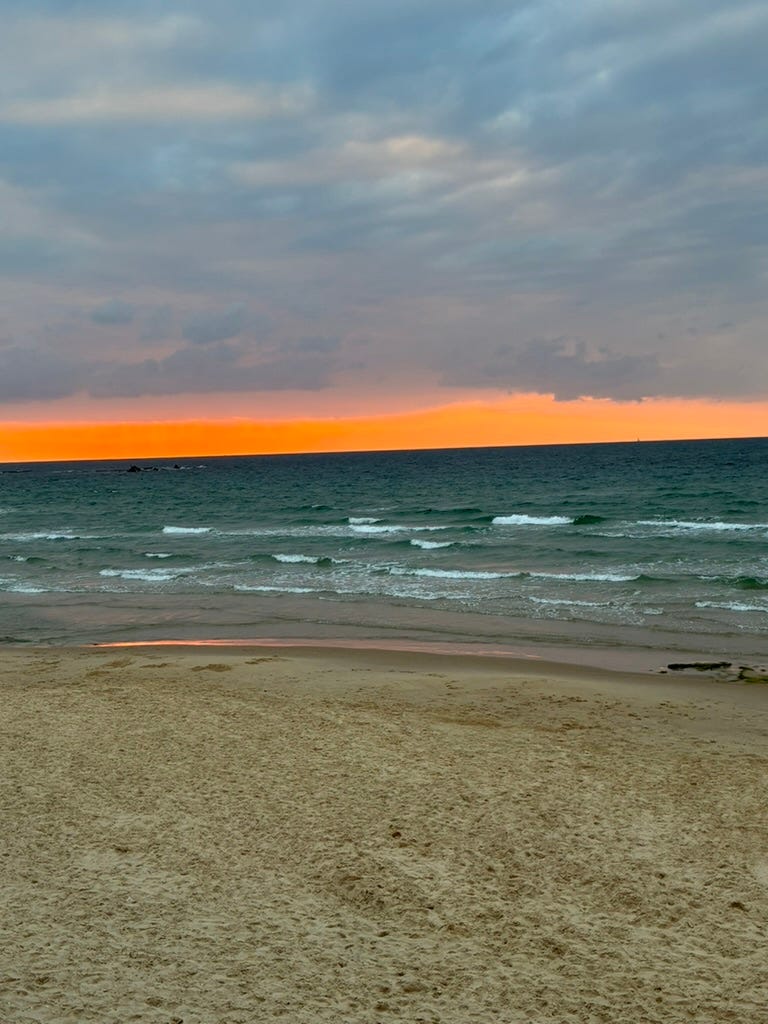
Today, I think of my softball days as a yawning span of boredom, interrupted by moments of terror, which is exactly what this war has been like. Mostly, the war is boring. It’s boring to sit at home, it’s boring not to be able to do fun things without being close to a bomb shelter, it’s boring reading about missile shrapnel and bombs all day long. But every few hours, a siren pierces the air, sending my heart racing with the knowledge that someone is trying very hard to kill me at this exact moment.
2. War is quiet
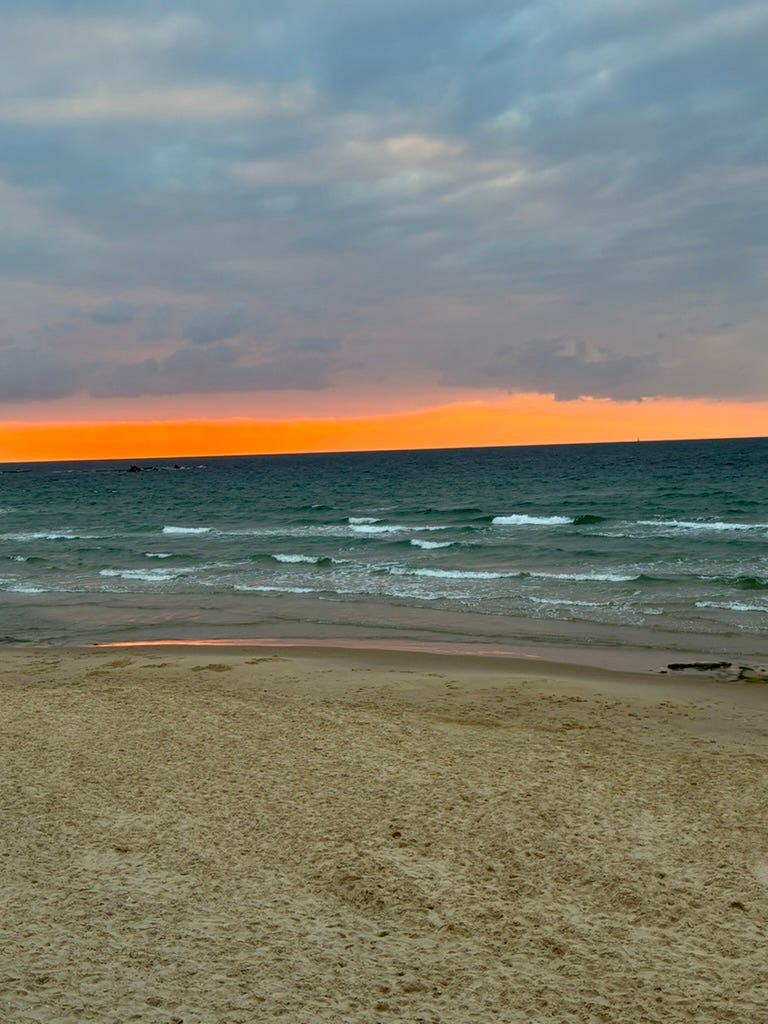
When the wail of missile sirens dies down, and after the explosions end, when we finally get the all clear, the city is as quiet as Yom Kippur. There’s almost no commercial traffic out of the airport, so the skies are quiet unless there’s a missile. Everyone is sticking close to home so the streets are quiet and there’s very little traffic. Buses are running, but not frequently, there’s no music coming from restaurants, and all the clubs in our neighborhood are closed. The silence feels extra silent because at any moment it might be shattered by a missile alert. When there isn’t terror, there’s a weird kind of peace.
3. War is a collective experience
In retrospect, Covid felt like a war. We monitored the news, schools closed, public gatherings were cancelled, people died. But with Covid, we learned to fear our friends and neighbors.
If you saw someone walking unmasked down the street in Brooklyn, the protocol was to cross the street, lest they infect you. We feared people who were unvaccinated and or unboosted or unmasked. But in this war, I need people. If I’m alone in my mamad, I get worried that the building will be hit by a missile and I’ll be trapped alone. If I’m walking down an empty street, I worry there will be an alert and I won’t be able to find a shelter.
Running into friends feels like a gift. Yesterday, I ran into a past Hebrew teacher in a public shelter – we embraced and chatted as though we were sisters, checking in on each others wellbeing, talking about writing in the shelter, enjoying the warmth and camaraderie of huddling six meters (or about 20 feet, if you measure in Eagles and Hamburgers) below ground with a bunch of strangers. When the all-clear came, we walked up together and parted on the street, content with the knowledge that we were experiencing similar things at similar times, even if we weren’t together. I don’t know that I will ever feel fully Israeli, but the war has been a baptism of sorts, bringing me more in synch with Israeli rhythms and making me feel more Zionist than ever.
4. War is personal
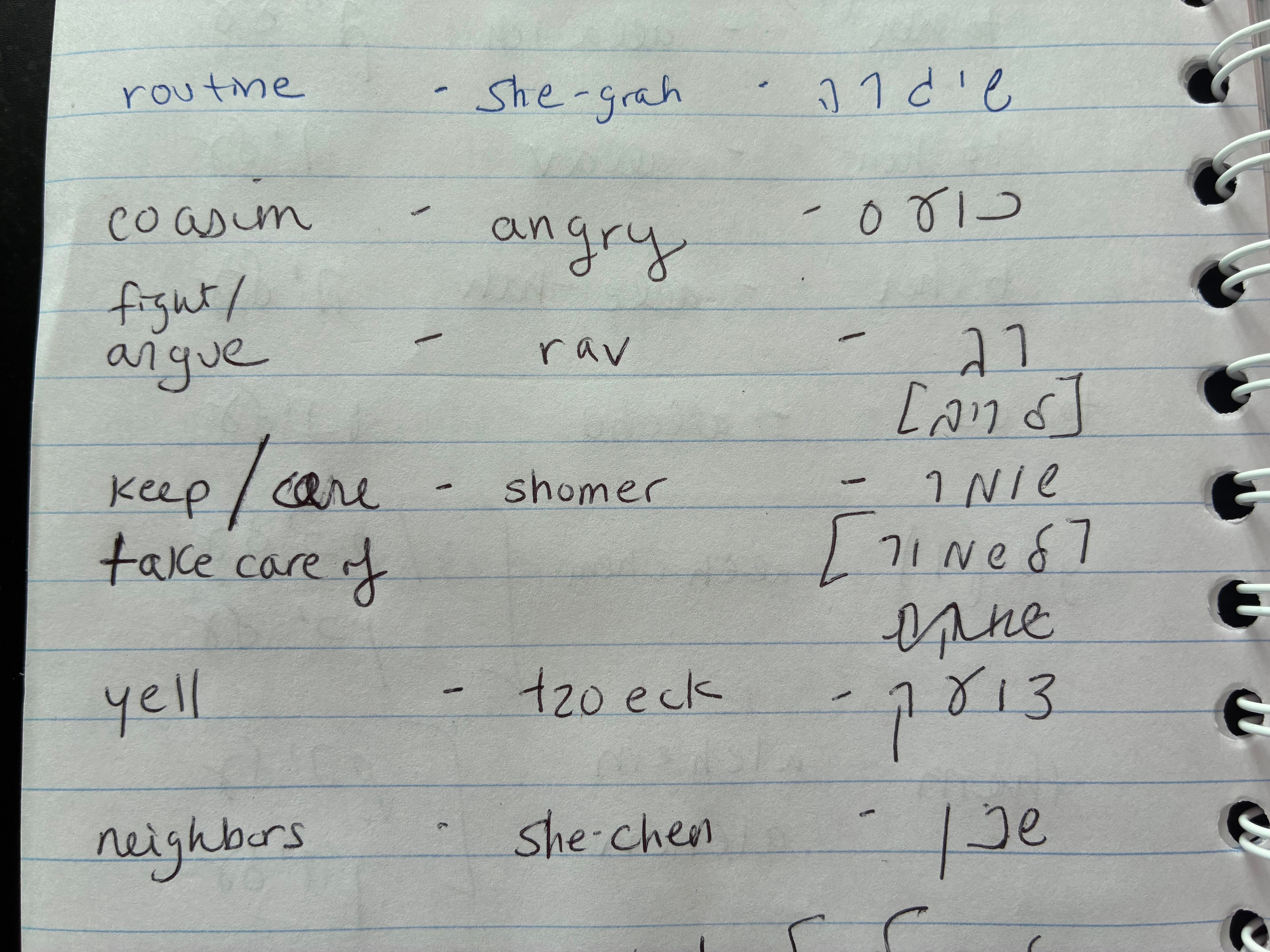
In my language class, after we learned the word “angry,” much of the class was taken up with discussions of how angry we are at Iran. When there is a war we are angry with Iran. When there are sirens at 2AM we are angry with Iran. When Iran sends cluster missiles to population centers, which is a war crime, we get the most angry Iran. We aren’t angry with the Iranian people, to be clear. But we hate the regime with a burning passion, because it is actively trying to kill us just for being Jewish. Fuck you, IRGC.
Then again, Iran let us sleep for nine interrupted hours the other night. When I woke, my first thought was, thank you Iran.
5. War is exhausting
I am fortunate to have a mamad, which means I only have to walk down the hall to a different bedroom, rather than downstairs, out of the building and across the street to a public shelter. But it’s been over a week of sleepless nights and days interrupted by trips to shelters. There no flow to the day — it’s just waiting for the next alert, listening for the explosions, and then hearing for the all-clear. Living in a permanent state of tension, unable to focus or concentrate for long without your brain being pierced by the shriek of a siren, is grueling.
7. War is bad for my skin
The first few days I ate a lot of chocolate. Then I ate a lot of cheese. I’m also probably a bit stressed out. All of which made my face break out like I’m a teenager experiencing a second adolescence. I even bought a face mask at the pharmacy, but I think what my skin really needs is for this war to end.
8. War is a good time to think
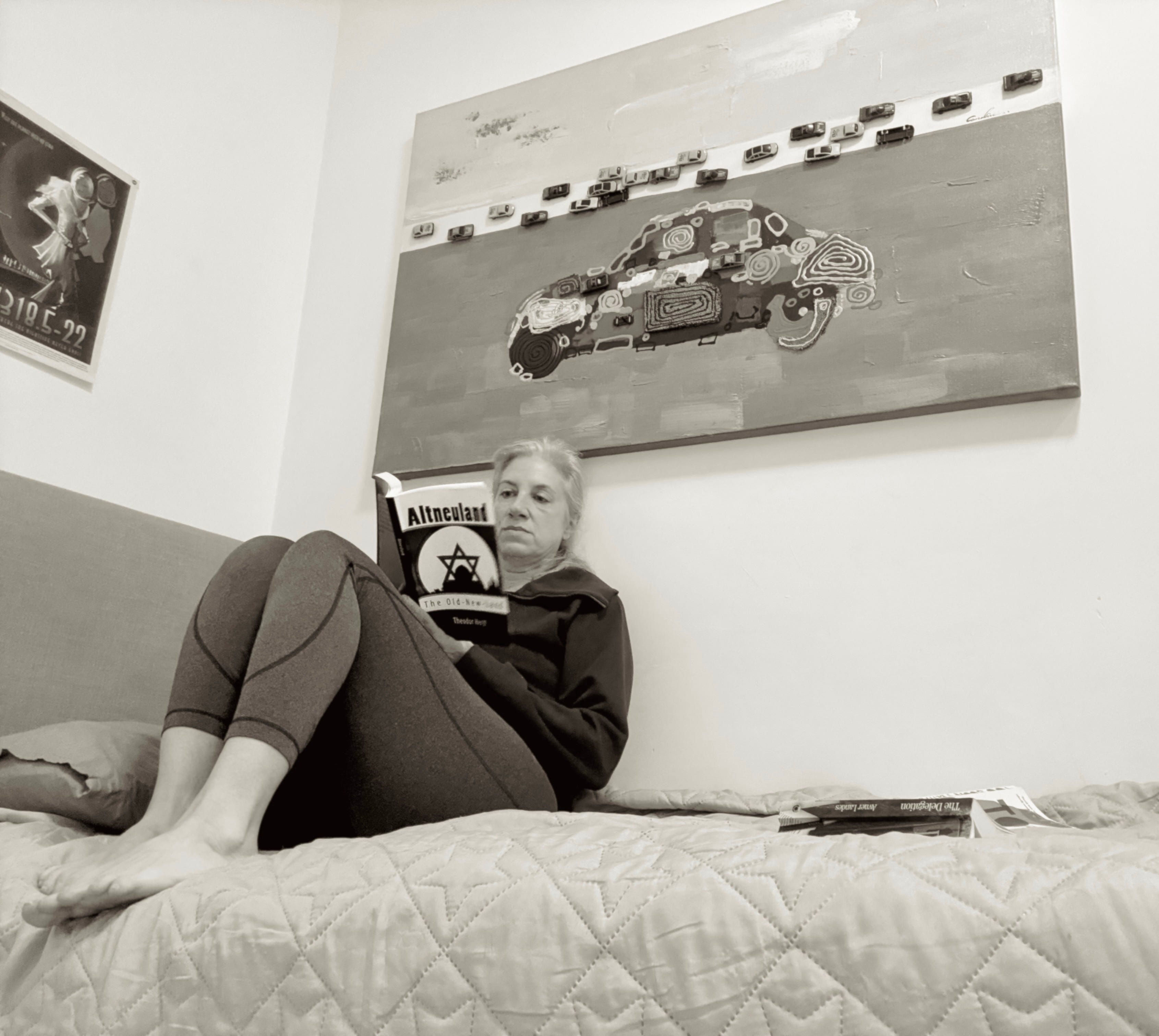
Despite the fatigue, the stress and the monotony, war gives you a lot of time in places with no cell service or WiFi. You can only spend so much time talking to other people in a small enclosed space. Then, my mind cranks itself up and whirs for a while. Sometimes I’m so engrossed in deep thoughts about life and death and Jews and the world order that I forget it’s time to exit the safe room. It’s kind of nice having time to really work stuff out.
9. War makes you feel alive
My grandparents met in the army during World War Two. For them, it was the best of times and the worst of times. An ocean away, their families were being murdered or surviving in the most gruesome ways possible, with psychic and physical scars I would come to know as a child. But for my grandparents, the children of Eastern European Jewish immigrants, it was their peak moment of American belonging.
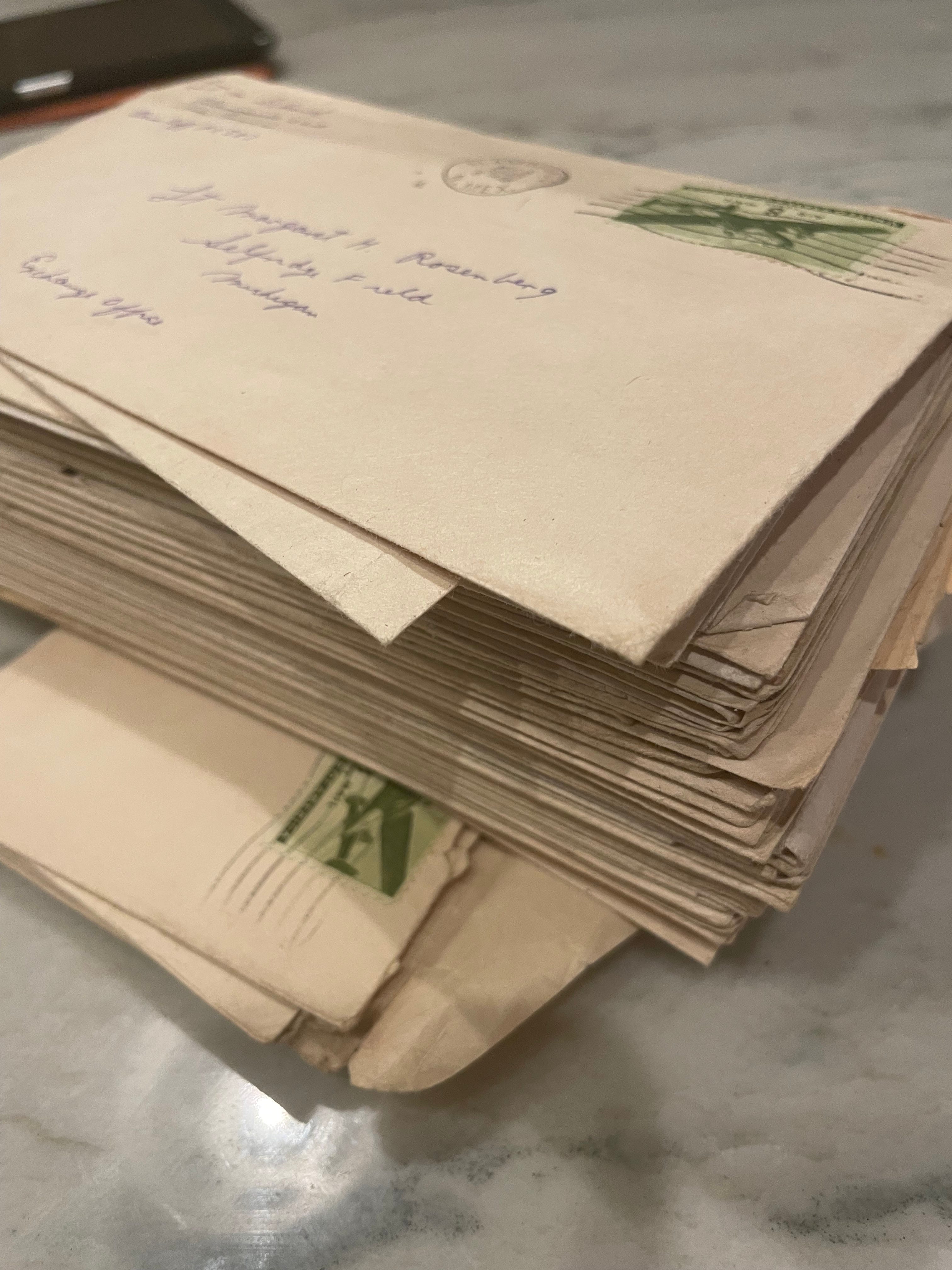
They loved being a part of something bigger, having a purpose, flying around the country to different air bases, eating weird foods they’d never encountered in their Jewish homes (ham steak?), practicing weird American customs (what’s an Easter bonnet?), and meeting other Americans who asked to see their horns (true story!).
As a result, our Passover Seders always concluded with a round of WW2 drinking songs, including a super misogynistic ditty penned by my grandfather and set to the tune of the Columbia University fight song. The Passover before my husband and I married, his parents came to my family’s Seder – an event that would never repeat. At the Seder, halfway through the war songs, my father explained to my future father-in-law why we were all suddenly acting like we were at an Officers’ Club.
My father in law nodded, then looked at my grandparents smiling as they relived this high point from their youth.
“It was a fun war,” he commented.
War might not be fun, but it sure shows you what you have (life) and what can so easily and randomly be taken from you (your home, along with every single thing you own, your street, your coffee shop, your market, your loved ones, your country).
10. War makes the ordinary extraordinary
Today I went to language class, stopped in a shelter, came home, wrote, and did my homework and let me tell you: I feel like superwoman. It’s like that tween-age game where you add “in bed” to the end of every sentence to radically alter the meaning. Today I want to language class DURING A WAR. Then I rested between sirens, BECAUSE ITS A WAR. Then I did my homework, DURING A WAR. I am a hero just for existing. Are other people more heroic? For sure, but we all do our part. And my part, in this war, is keeping Hebrew teachers employed, the house clean, the family connected, and sharing my experience via barely edited essays.
11. War is a civics lesson
I am fortunate to live in a nation that has invested in keeping its citizens safe. Instead of building underground terror complexes or funding a massive nuclear program and a staff of morality police, Israel built public bomb shelters; mandated that new buildings have a war-proof concrete core; moved hospitals deep underground; and designed a system that detects incoming missiles, alerts people on the ground who are in range via an app, and then shoots down the missile. If I could pick one country to live in during a war, it’s absolutely this one. And because of the communal aspect or the war, plus Israelis’ natural inclination to behave as if everyone is a relative, I have never felt safer or more cared for by a government entity. Not even when I worked for the US government. Especially then.
12. War is inconsistent
Sometimes I forget there’s a war. Those are the best times.
13. War is ridiculous
Sometimes I forget that this is a ridiculous way to live, that war is an insane way to solve conflicts, and that other people all over the world don’t have to live in a permanent war zone. But of all the war zones in all the countries of the world, I choose this one.


Author: Contributor
For more details on this author's background and expertise, please refer to the content within the article itself. The views and opinions expressed in this piece are those of the author and do not necessarily reflect the official policy or position of geula.news or its affiliates.