
By Rabbi Josh Wander
I live in what the international media loves to call a war zone. Sirens sound. Missiles are launched from Iran, Lebanon, and Gaza. I proudly serve in the IDF, as do my children. By every conventional metric, this should be the most dangerous place on earth for my family. Yet despite the headlines, despite the alarms and the tension that accompanies living through a war, I cannot imagine a safer place to be right now. The irony becomes almost surreal when Jews from places like Toronto, Teaneck, or Baltimore tell me they are worried about my safety. From their perspective it makes sense. They watch the news and see rockets, drones, regional war, and dramatic footage playing endlessly across television screens. To them the situation here appears chaotic and unpredictable. But that picture leaves out the most important variable in the entire equation.
Eretz Yisrael is not just another country on the map. The Torah describes it in terms that apply nowhere else: “The eyes of Hashem your God are upon it from the beginning of the year until the end of the year.” This is not a poetic flourish or a metaphor meant to inspire religious sentiment. It is describing a fundamentally different spiritual reality. The Land exists under a unique form of Divine supervision—a level of hashgacha that does not operate in quite the same way anywhere else in the world. That reality changes the entire calculation. Yes, missiles are fired at us. Yes, there is a war taking place around us. No one pretends that war is safe or that danger does not exist. But Jews have never survived because the strategic situation was favorable or because our enemies suddenly became reasonable. We survived because the Ribbono Shel Olam runs history. Living in Eretz Yisrael means living inside that unfolding story rather than watching it from a distance.
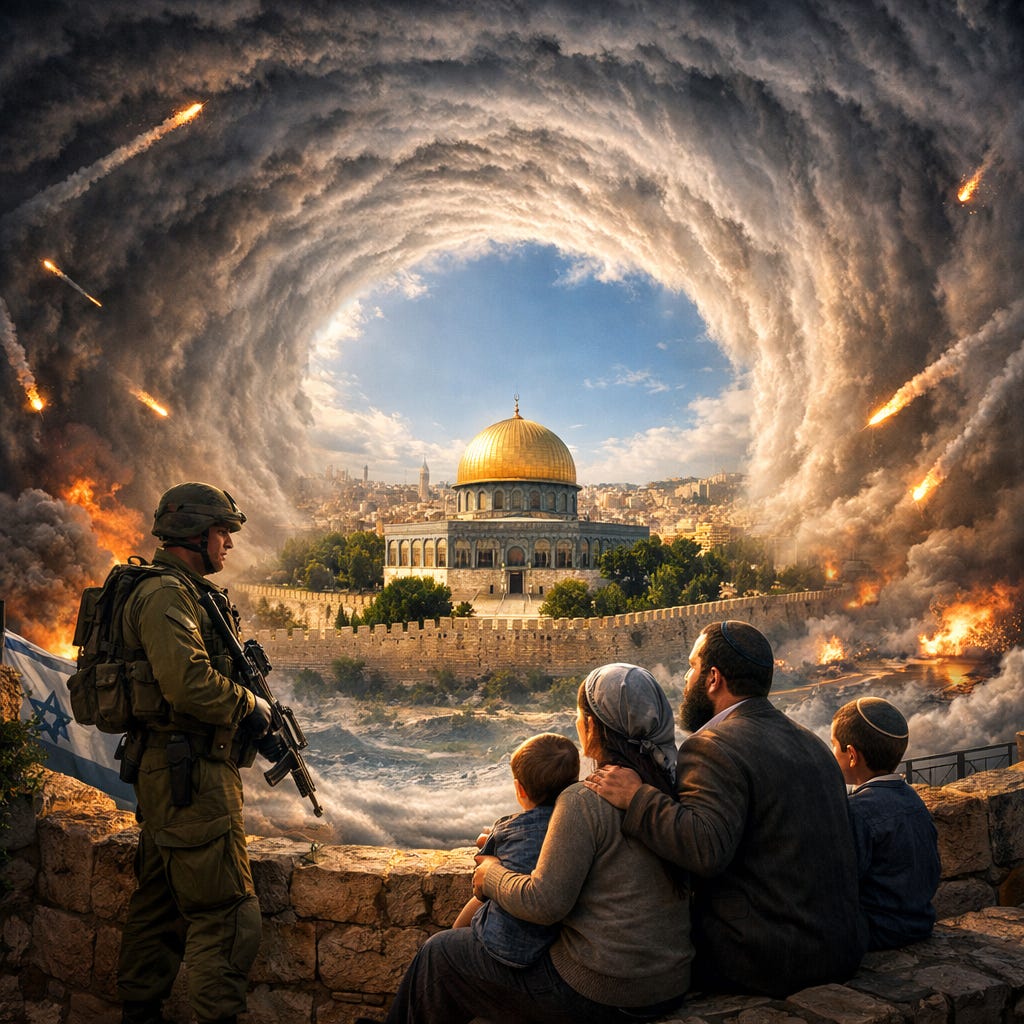
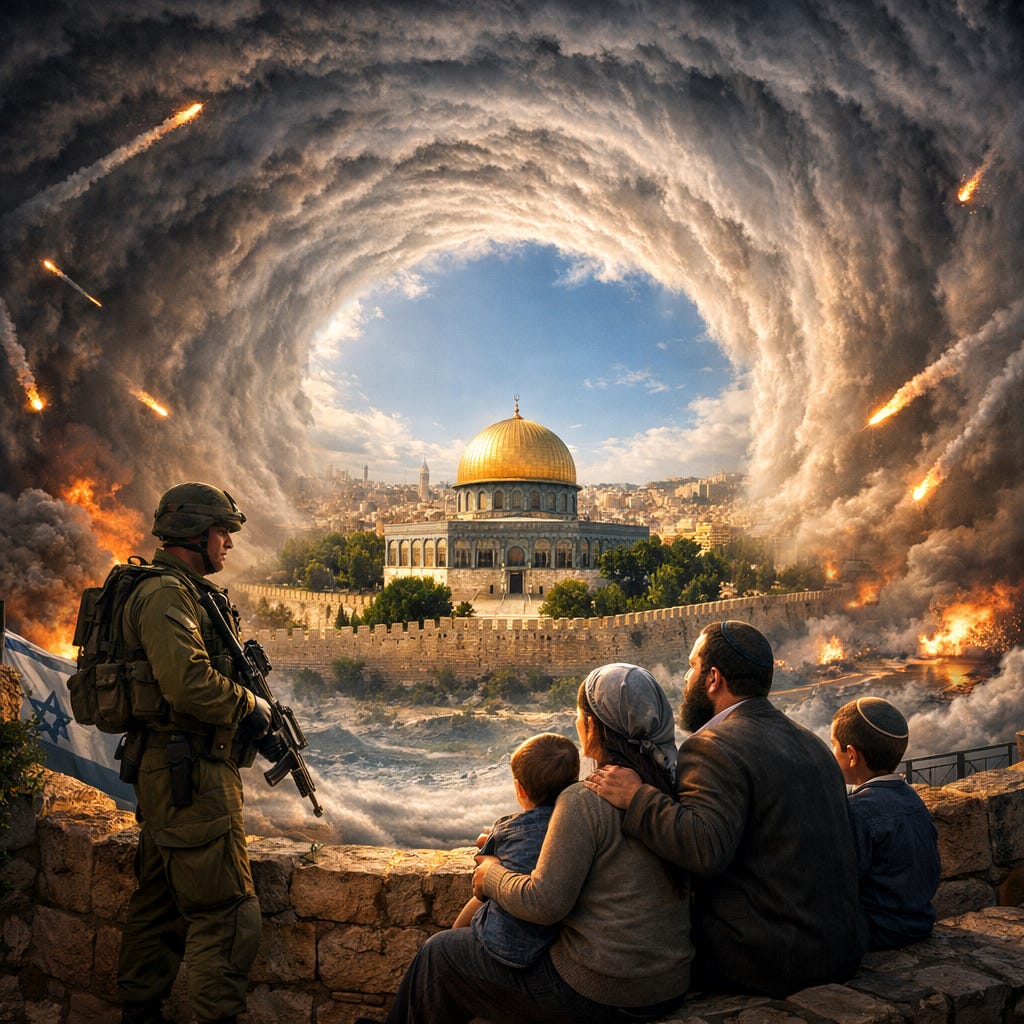
The situation reminds me of a powerful parable. Imagine a massive hurricane swirling with destructive force. Winds are tearing apart buildings, debris is flying through the air, and the entire storm system is violent and terrifying. Anyone observing such a storm from the outside would conclude that the most dangerous place imaginable would be inside it. But meteorologists know something remarkable about hurricanes. At the very center of the storm lies the eye. Inside the eye there is calm. The winds drop dramatically, the chaos subsides, and sometimes the sky even opens for a brief moment. While devastation rages all around, the center of the storm is the quietest place of all. From the outside it appears to be the worst place to stand, but from within the eye it can be the safest. That is what living in Eretz Yisrael often feels like today. From afar people see only the swirling storm, but those standing at the center experience something very different.
Meanwhile Jews living comfortably in exile frequently assume that they are the ones who are safe. After all, there are no rocket sirens in suburban New Jersey, no Hezbollah missiles falling over Toronto, and no Iron Dome intercepts lighting up the sky above Baltimore. But Jewish history has taught us something uncomfortable: the calm of exile is often an illusion. It appears stable until suddenly it isn’t. One political shift, one economic collapse, one surge of antisemitism, one regime change—and the ground beneath Jewish communities can change overnight. The Torah never described exile as a secure condition. It described it as galut, a temporary and fragile state that the Jewish people were never meant to mistake for permanence.
Some Chassidic masters taught an even deeper idea. As the end of days approaches, the Shechinah—the Divine Presence—gradually returns to Eretz Yisrael together with the Jewish people. When that happens, the spiritual protection that accompanied Jewish life in exile begins to withdraw along with it. When the Shechinah departs, an element of shmira departs as well. If that is true—and many great rabbis believed it—then the most dangerous place for a Jew at the end of history may not be the battlefield in Israel. It may very well be exile itself.
Another irony of this moment is something the outside world struggles to understand. Israel may be the only country on earth where, when war breaks out and the skies close, the citizens who happen to be abroad do not run away from the country—they desperately try to get back in. We have seen this repeatedly during recent conflicts. Flights were canceled, airspace restricted, airports closed, and still Israelis across the globe scrambled for any possible way home. They rerouted through distant countries, crossed land borders, paid enormous prices for complicated flights, and did whatever it took to return to Israel. In most countries, when war erupts, citizens rush to escape. In Israel, they rush to return. Deep down they know something that is difficult to explain to someone living comfortably in exile: this is home, and this is where Jewish history is unfolding.
Perhaps this also reveals something deeper about the moment we are living through. At times it seems that the most secular Jew in Israel has more practical faith in Hashem than the greatest Rosh Yeshiva sitting comfortably in exile. The Israeli who rarely enters a synagogue will still fight through canceled flights, closed airspace, and an active war zone just to return home. Something deep in his Jewish soul tells him this is where he belongs. Meanwhile Jews studying safely in diaspora yeshivas sometimes look toward Israel and see only danger. One Jew trusts the headlines. The other trusts the long arc of Jewish history.
A story I heard this week captures the irony perfectly. A group of Korean tourists were walking through the Old City of Jerusalem. Someone asked them if they were trying to catch the next flight out of Israel because of the war. Their reaction was one of genuine confusion. “What? And miss this historic opportunity?” one of them responded. “To watch God protect His people and His Land? Of course we aren’t leaving at a time like this.” Think about that for a moment. Visitors from the other side of the world can recognize that something historic is unfolding here. They understand they are witnessing events that will be written about for generations. If only more Jews saw the situation the same way.
When people abroad tell me that they are davening for our safety, I answer sincerely that I appreciate it. Prayer is always welcome and always meaningful. But I usually add something that catches them off guard. I tell them that we are davening for their safety as well, because in many ways they may need those prayers more than we do. Sometimes the place that appears to be the most dangerous is actually the calm center of the storm.

Author: Joshua Wander
The Geula Movement inspires and mobilizes Am Yisrael to actively advance redemption through Torah, unity, and action—restoring Jewish sovereignty, rebuilding the Beit HaMikdash, and shining light from Zion to the nations. https://geulamovement.substack.com/