

Please consider supporting our mission to help everyone better understand and become smarter about the Jewish world. A gift of any amount helps keep our platform free of advertising and accessible to all.
You can also listen to the podcast version of this essay on Apple Podcasts, YouTube Music, YouTube, and Spotify.
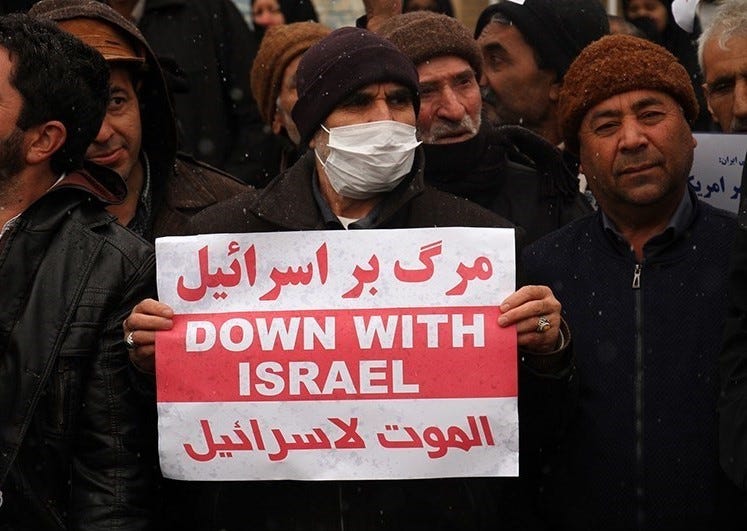
There are many interpretations about why the Islamic Republic of Iran, founded in 1979 after the Iranian Revolution, made Israel its self-proclaimed enemy.
Prior to 1979, Israel and Iran maintained a positive and cooperative diplomatic relationship which stood in stark contrast to the hostility that would later define their interactions. Tehran became one of the first Muslim-majority countries to recognize Israel, leading to robust economic, security, and even military cooperation throughout the 1950s, 1960s, and 1970s. Israeli contractors, advisers, and even airline connections linked the two capitals, and joint defense programs such as Project Flower reflected mutual strategic interests during the Cold War era.
But when the Islamic Republic of Iran came into being, the Israel–Iran relationship quickly ended.
Some say the new regime needed a permanent enemy to unify its population and justify strict domestic control. By portraying itself as the only state capable of confronting Israel, the regime reinforced its revolutionary image at home and abroad.
The Ayatollahs presented Israel as an extension of Western imperialism in the Middle East. By opposing Israel, Iran could portray itself as the defender of Muslims, Palestinians, and the “oppressed” against the West. The rhetoric is deeply tied to Shi’a revolutionary ideology: Fighting Israel is not just political, it is framed as a religious and moral duty.
The Islamic Republic often frames “Palestine” as a historically Islamic land, tracing its significance through over a thousand years of Muslim rule under the Umayyad, Abbasid, and Ottoman caliphates. By portraying Israel as a foreign, non-Muslim occupier of this sacred territory, the regime positions itself as the defender of Muslims worldwide, using the Palestinian cause to project religious and political authority across the Middle East.
This narrative allows Tehran not only to assert moral legitimacy at home but also to gain prestige and influence in the Arab and broader Muslim world, presenting itself as the uncompromising guardian of Islamic lands against what it casts as Western-imposed injustice.
Some call “Death to Israel” rhetoric, but it is so much more than that. The Iranian regime invested billions in proxies that surrounded Israel, known as its “ring of fire,” so it could shield itself from Israeli attacks while it developed ballistic missiles and nuclear weapons.
Hezbollah, with a vast rocket and missile arsenal, became the most heavily armed non-state military actor in the world, sitting on Israel’s northern border. Hamas and Palestinian Islamic Jihad in Gaza became the Iranian regime’s foothold on Israel’s southern front, enabling the regime to project power, destabilize the region, and threaten Israel with multi-directional conflict — all while maintaining plausible deniability and avoiding direct confrontation. There are also the Houthis in Yemen, Iran-aligned militias in Iraq, the Assad regime in Syria, and ongoing efforts to cultivate pro-Islamic Republic factions in the West Bank.
For years, Israel sat back and let these terror groups amass on its borders. The average Israeli was afraid of military confrontation with Hezbollah. Military tensions with Hamas and Palestinian Islamic Jihad always ended in a ceasefire. The West Bank produced dozens of terror attacks in Israel proper every year. The Islamic Republic and its hegemonic plan for the Middle East looked formidable.
Even the 2015 Iranian nuclear deal was a huge win for the regime, because it provided billions in funding, international legitimacy, and time to advance its nuclear and missile programs, all while Israel and the world were constrained from striking directly.
But then came the Abraham Accords. By normalizing relations between Israel and several Arab states, the accords shifted the regional balance of power, isolating Iran diplomatically and undermining its narrative of regional dominance. No longer could the Islamic Republic rely on the perpetual threat of a united Muslim front against Israel; instead, it faced a growing coalition aligned with Israel’s security and technological edge, forcing the regime to confront a strategic reality it had long denied.
In response, the Islamic Republic launched a diplomatic outreach effort aimed at bolstering ties with Arab states and positioning itself as a partner for regional cooperation outside of Western frameworks — an attempt, in effect, to create its own version of regional agreements that could counterbalance the Abraham Accords. This included high‑level talks with Gulf countries like the United Arab Emirates before relations deteriorated, and engagement with Saudi Arabia under Chinese mediation that led to the restoration of diplomatic relations in 2023, a rare breakthrough given decades of rivalry.
Iran also advanced initiatives such as the “Hormuz Peace Initiative,” which it presented as a plan for regional security cooperation focusing on the Persian Gulf and Strait of Hormuz — an attempt to frame itself as a force for regional stability and mutual economic benefit rather than perpetual confrontation.
That, too, had its limits, especially as rumors increased around the prospect of Saudi Arabia joining the Abraham Accords.
That’s when the Islamic Republic’s so‑called “axis of resistance” stepped in. On October 7, 2023, Hamas and Palestinian Islamic Jihad launched a coordinated assault against Israel, killing and abducting civilians and soldiers alike. While the groups carried out the attack on the ground, Iran’s influence was unmistakable: The operation reflected years of training, funding, and strategic planning from the Iranian regime, designed to punish Israel for its regional alliances, destabilize the Abraham Accords, and reassert the regime’s relevance in Middle Eastern geopolitics.
In that moment, Israel’s defensive war became an existential struggle imposed upon it by Iran’s decades-long strategy and ideological obsession.
The strategy of October 7th was simple: Lure Israel into a ground invasion of Gaza, then exploit that vulnerability to open multiple fronts against it, particularly through Hezbollah in the north and other Iran-backed actors across the region.
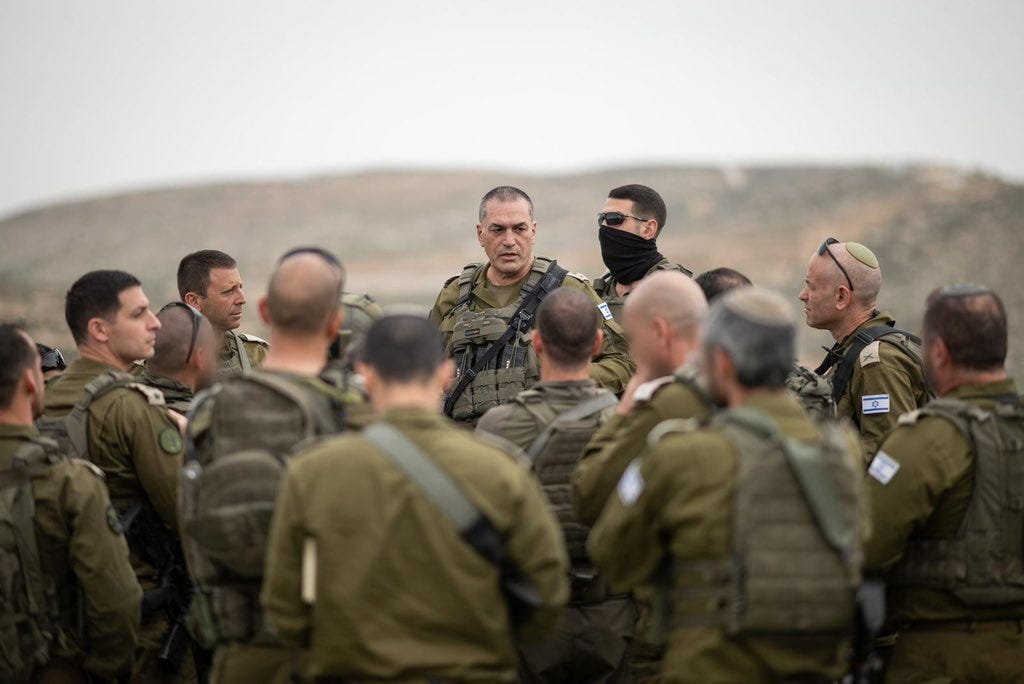
It quickly escalated into a seven-front war, with rockets raining from Gaza in the south, Hezbollah striking from Lebanon in the north, Iranian-backed militias stirring in Syria and Iraq, unrest in the West Bank, threats from Yemen’s Houthis, cyberattacks across critical infrastructure, and relentless international propaganda campaigns — all orchestrated to stretch Israel’s defenses and test its resolve on every possible front.
While the Israel–Hamas war in Gaza dominated global attention, the sudden death of Iran’s president, Ebrahim Raisi, and foreign minister in a May 2024 helicopter crash served as a stark reminder of who this war is truly about: Iran and Israel. The Islamic Republic attributed the crash to “complex climatic conditions,” but speculation quickly emerged that Raisi had been using a Hezbollah pager and that Israel may have exploited the opportunity.
Raisi was a key hard-liner, widely regarded as a protégé of Supreme Leader Ayatollah Ali Khamenei, and some analysts believed he could eventually succeed the octogenarian supreme leader. His death not only shook the Iranian political hierarchy but also highlighted how deeply the conflict with Israel penetrates Tehran’s leadership and strategic calculations.
Two months later, Israel delivered another strike against Iran, assassinating Hamas’ political chief Ismail Haniyeh while he was visiting and staying at a Tehran safehouse.
The following month, thousands of Hezbollah’s handheld pagers, which the group had purchased from a front company, exploded simultaneously across Lebanon and parts of Syria when a coded signal was sent to them. Israel’s intelligence community had rigged them with small explosive charges before they were distributed to Hezbollah operatives, injuring thousands of them and significantly disrupting their communications.
Then Israeli airstrikes degraded Hezbollah’s assets and killed its senior leaders — including longtime leader Hassan Nasrallah and his probable successor Hashem Safieddine in strikes in Beirut, disrupting the organization’s hierarchy and diminishing its ability to wage coordinated large‑scale operations.
These events triggered far-reaching regional consequences, including the collapse of Bashar al‑Assad’s regime in Syria, a longtime Iranian ally. With Hezbollah’s leadership decimated and its operational capacity severely weakened, Assad could no longer rely on Hezbollah’s support that had sustained his forces for years, ultimately forcing him to flee to Russia.
Immediately after Assad’s regime collapsed, Israel broke the strategic buffer zone that for decades separated it from direct engagement with Iran. Under Assad, Syria hosted robust air‑defense systems, long‑range missile batteries, fighters, and radar networks. These defenses made Israeli military flights through Syrian airspace both risky and constrained. After Assad’s downfall, Israel quickly moved to dismantle most of these defenses and exploited the power vacuum to expand its control over former Syrian military infrastructure and the border buffer zone.
With Syria’s air defenses neutralized, Israeli tankers and fighter jets could operate far more freely in the skies above Syria and northern Iraq, creating a safer and more direct aerial corridor that extends toward Iran’s western frontier. This corridor now allows Israel’s air force to accompany deep‑strike missions with mid‑air refueling and expand its operational reach throughout Iran than would have been possible while Assad’s missile batteries were active.
With Iran’s defenses weakened, Israel was positioned to undertake a much larger campaign when the political decision was made. In June 2025, that preparation culminated in what came to be known as the 12‑Day War — a coordinated Israeli offensive that achieved air superiority over western Iran and struck hundreds of military, nuclear, and command targets, killing senior Iranian military leaders and crippling key elements of the regime’s war machine.
The strikes shattered the perception of invincibility that the regime had cultivated for decades. Iranian citizens, seeing the state’s inability to protect critical sites and leaders, began questioning the competence and legitimacy of their rulers. Coupled with economic hardship caused by corruption, mismanagement, and the costs of proxy groups, the war amplified existing social discontent.
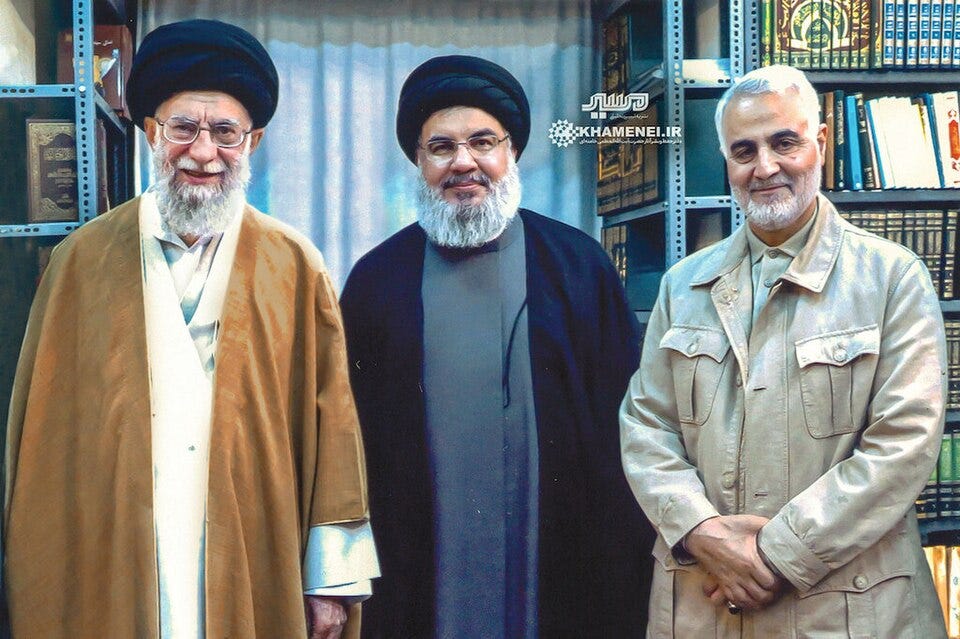
The psychological impact of Israel’s precise strikes, along with the deaths of high-profile military and political figures, symbolized that the regime was neither untouchable nor infallible, emboldening citizens to take to the streets in protest.
By late 2025 and early 2026, these factors converged to spark nationwide demonstrations against the economy, corruption, repression, and the regime’s failed policies — protests that some analysts describe as the first real cracks in the Islamic Republic’s internal control since it took over the country in 1979.
The regime responded with an unprecedented level of lethal force. Security forces and paramilitary units opened fire on demonstrators, used live ammunition, carried out mass arrests, and imposed a near‑total internet and communications blackout in early January to prevent documentation and coordination. Internal health‑sector estimates shared with media outlets suggested that tens of thousands of people may have died during the worst days of the crackdown in early January 2026, with some hospital figures pointing to over 30,000 deaths in that two‑day period.
The Islamic Republic’s brutal response to the protests had immediate repercussions on its foreign policy, particularly regarding negotiations with the United States over its nuclear program, ballistic missile program, and regional behavior. The sheer scale of the crackdown made the Iranian regime appear unstable and untrustworthy. U.S. negotiators viewed it as preoccupied with domestic survival and unwilling to make concessions, both on nuclear oversight and on regional provocations.
This convergence of factors (domestic repression, failed diplomacy, and Israel’s growing operational freedom) directly contributed to the escalation that became the current war, which started with a successful assassination of Ali Khamenei and around 40 other high-ranking officials.
The Islamic Republic escalated in a way that seemed almost inexplicable, striking at Arab states across the Gulf — including Saudi Arabia, Bahrain, Kuwait, Qatar, the United Arab Emirates, and Jordan — a move which reinforced the obvious fact among Arab leaders that Iran was the immediate threat to regional stability.
What Tehran believed might force Arab governments to pressure Washington or fracture the U.S.–Israel axis instead strengthened that coalition. Arab states, whose populations and leaders are deeply invested in economic growth, energy security, and territorial sovereignty, saw Iranian strikes as direct violations of their security. Their increasingly firm alignment with U.S. and Israeli interests undercut Iran’s long‑standing regional strategy, closing diplomatic avenues and isolating the regime further both domestically and internationally.
What began as Israel protecting its borders and citizens from Iranian-backed proxies escalated into a confrontation that exposed the Islamic Republic’s vulnerabilities at home and abroad, weakened its network of terror groups, and provoked an international coalition aligned against it.
Now, Iran’s regime is on the brink, and Israel has never appeared stronger or more accepted across the region.

Author: Contributor
For more details on this author's background and expertise, please refer to the content within the article itself. The views and opinions expressed in this piece are those of the author and do not necessarily reflect the official policy or position of geula.news or its affiliates.