
By Rabbi Josh Wander
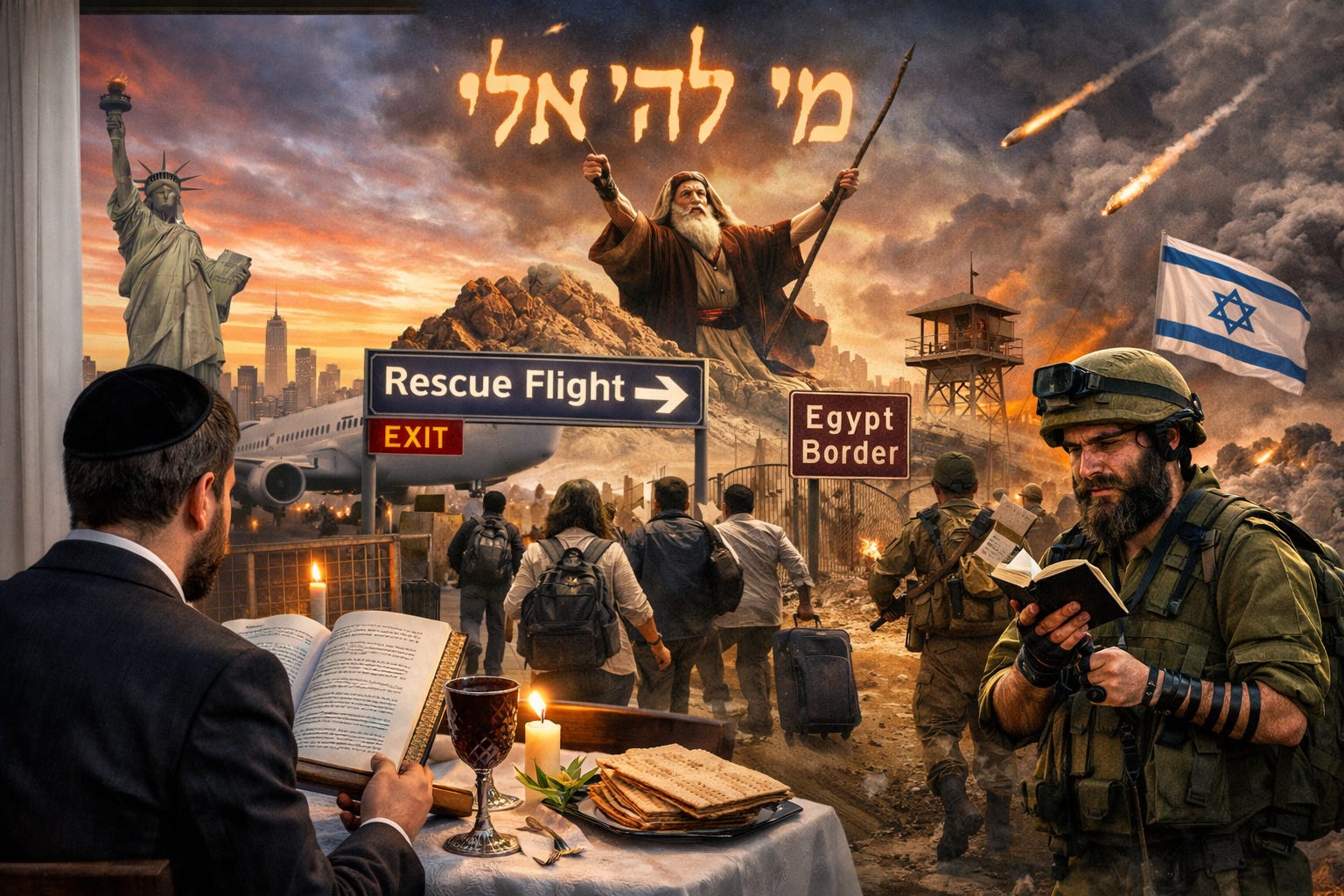
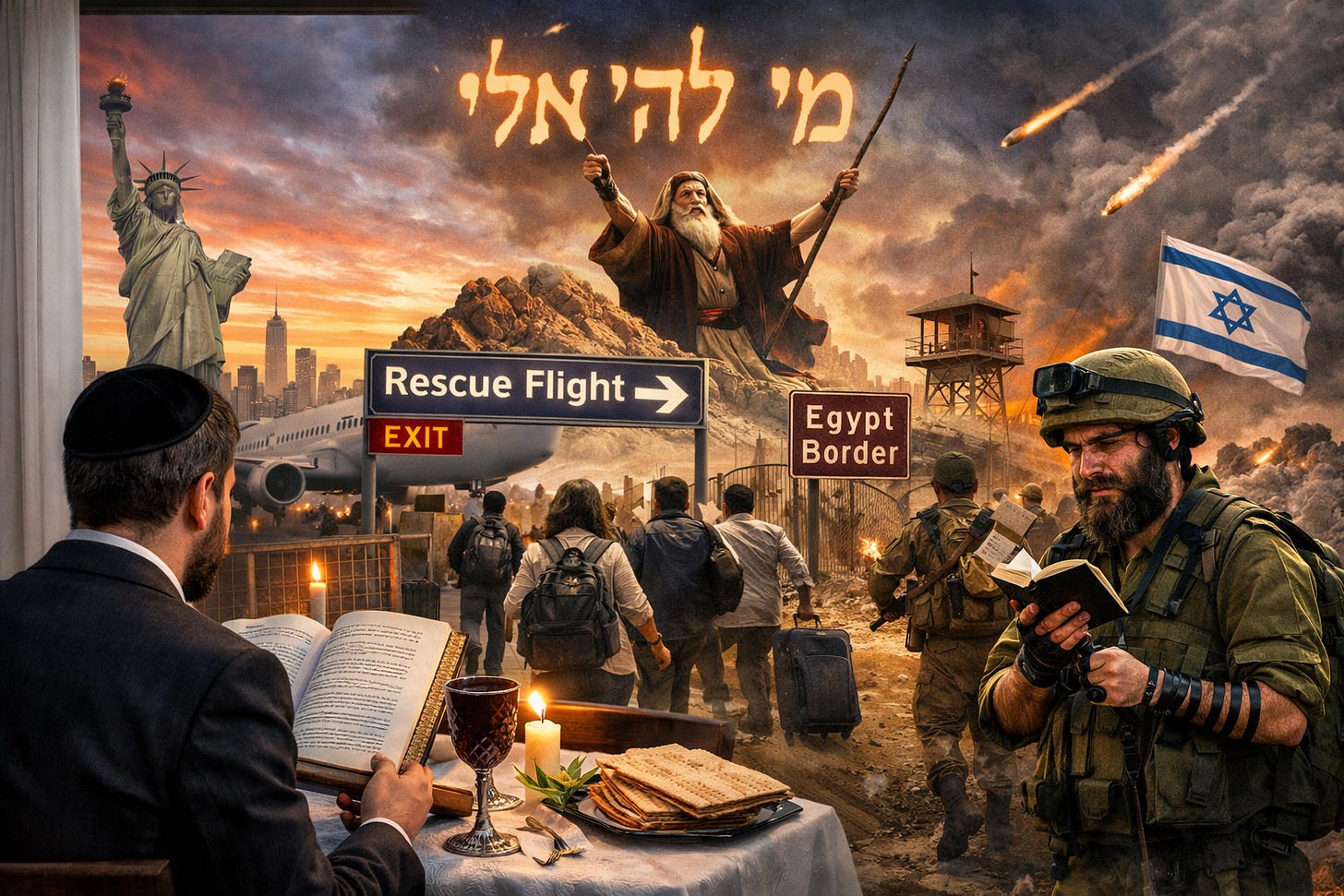
The tension is no longer theoretical. It’s not something you debate over coffee in Brooklyn or analyze in a WhatsApp group. It’s in the air here—literally. Sirens. Interceptions. Booms that shake the walls and, if you’re paying attention, shake something much deeper inside. Eretz Yisrael is moving through what Chazal described as Chevlei Moshiach—the birth pangs of redemption—and the reactions are exposing a fault line that many would rather ignore.
There are Jews—American Jews—who found themselves here during this moment. And instead of feeling that they’ve been placed at the center of history, many are scrambling to get out. Racing to borders. Looking for “rescue flights.” Even heading—of all places—toward Egypt. Yes, Egypt. The very civilization we are about to sit down and recount our miraculous departure from. The same Egypt we were commanded never to return to. And yet, that is the direction some are running…just to get “home.”
Home. But what does that even mean anymore? Because the same individuals will arrive back in the comfort of exile, sit at beautifully set Seder tables, raise their cups of wine, and declare—with full sincerity—“Next year in Jerusalem.” The words will be said. The rituals will be observed. The matzah will be eaten. And yet, the contradiction will hang in the air, unspoken but deafening.
You were just there. You were living it. And you left!
This isn’t about judging individuals. It’s about confronting a collective reality that has been building for generations. We have constructed a version of Judaism in exile that is remarkably functional—comfortable, even inspiring at times—but fundamentally detached from the raw, disruptive, all-consuming nature of Geula. Redemption is not meant to be convenient. It’s not meant to fit neatly into vacation schedules or school calendars. It demands movement. It demands discomfort. It demands a redefinition of what “home” actually is.
And that raises a deeply uncomfortable question: are American Jews—by and large—equipped to handle Moshiach?
Jewish history suggests that this is not a new problem. Again and again, at critical turning points, there has been a sorting process. In Spain, there were those who saw the writing on the wall and left early, rebuilding elsewhere. Others stayed—convinced that the system would hold, that their status was secure—until it wasn’t. In Eastern Europe, there were those who recognized the danger and moved on, often to Eretz Yisrael. Others delayed, rationalized, waited for things to stabilize. We know how that ended. In Nazi Germany, even as the storm clouds gathered, many clung to the illusion that their integration, their success, their “normalcy” would protect them.
History is not subtle about this pattern. There are those who hear the call—the eternal call of “Whoever is for Hashem, come to me”—and move. And there are those who hesitate—and get left behind.
What we are witnessing now may be a modern version of that same process. Not through decrees or expulsions—at least not yet—but through something more internal. A test of perception. A test of identity. A test of whether a Jew actually believes that Eretz Yisrael is home—not as a slogan, but as a lived reality.
Because Geula is not just about miracles in the sky. It’s about a shift in consciousness. When missiles are intercepted overhead and people here instinctively say, “Baruch Hashem,” that’s not just resilience—it’s alignment. It’s a recognition that we are not random actors in a chaotic world, but participants in something unfolding with purpose. To be here, in this moment, is to witness history not as a spectator, but as a participant.
And that’s exactly what makes it so overwhelming for those who are not ready. Because if this is real—if Geula is actually happening—then everything has to change. Priorities. Geography. Identity. The comfortable distance of exile disappears, and suddenly the words we’ve been saying for generations demand to be taken seriously.
Next year in Jerusalem is no longer a hope. It’s an invitation. Or maybe even a demand.
But there is an even more uncomfortable layer to this conversation—one that many prefer not to touch. There are well-meaning Jews in America who will say, with sincerity, “Of course we support Israel.” They’ll donate. They’ll advocate. They’ll say Tehillim. And they truly mean it. But beneath that support is an unspoken assumption: that there are two roles in the Jewish story. There are those who live in Israel, serve in the army, and bear the physical burden—and then there are those who support from afar, spiritually and financially, from the safety of exile.
In other words: they will fight, and we will pray. But how does that sound? Because we’ve heard that language before.
When the tribes of Reuven and Gad chose to remain on the other side of the Jordan, Moshe Rabbeinu didn’t respond with polite understanding. He didn’t say, “Everyone contributes in their own way.” He challenged them directly: “Shall your brothers go to war while you remain here?”
It wasn’t just a logistical question. It was a moral one. Can a people truly be united if some are willing to risk everything while others consciously choose comfort? Can we call it shared destiny if the danger is outsourced? If the battlefield is someone else’s responsibility?
Yes, tefillah matters. Of course it does. No one who understands Jewish history would ever minimize its power. But tefillah was never meant to replace responsibility. It was meant to accompany it.
The idea that one group of Jews will physically defend the nation while another group remains comfortably distant, offering moral support from thousands of miles away, may feel acceptable in exile—but it becomes much harder to justify in a moment of national rebirth.
Because Geula doesn’t just restore a land. It restores a people. A people that is meant to be whole. Integrated. Present. Not divided into those who live the story and those who watch it unfold from afar.
So the question isn’t only whether American Jews can handle the intensity of Geula. It’s whether they are willing to step into a model of Jewish life that no longer allows for comfortable distance. A model where “support” might mean showing up. Where solidarity might mean sacrifice. Where identity is no longer theoretical, but lived—fully, physically, and sometimes uncomfortably.
Because if history is any guide, moments like this don’t wait forever. They move forward—with or without us.
Some will hear the call and rise to meet it. And some will continue to say all the right things, from all the wrong places.
And that may be the most uncomfortable truth of all.

Author: Joshua Wander
The Geula Movement inspires and mobilizes Am Yisrael to actively advance redemption through Torah, unity, and action—restoring Jewish sovereignty, rebuilding the Beit HaMikdash, and shining light from Zion to the nations. https://geulamovement.substack.com/