When my family and I came to Israel in 1998, our daughter (who’s now closing in on forty) was just about to have her Bat Mitzvah. It was important to us that she read Torah in a “traditional” synagogue. In other words, what we wanted for her was an “egalitarian Orthodox” setting (for lack of a better term), where the service would be completely traditional, but where she could read Torah.
Yet there were essentially no options. So we rented a space, set up our own minyan and did things exactly as we wanted them to be.
On the morning after the Bat Mitzvah, someone at my work who had attended told me that she’d enjoyed the simcha, but that (this being Israel where it was in vogue to say whatever you think long before Donald Trump came to the scene) we’d been unfair to our daughter. Why? “Because she clearly loved reading Torah, and she’s great at it. And now she can’t do it again. So you’ve set her up for long-term frustration and disappointment ….”
Except that our daughter regularly reads Torah. As will our granddaughter at her Bat Mitzvah in a year or so, not in a hired hall, but at a regular shul.
Religious life in Israel has changed in myriad ways during the almost three decades that we’ve been here—for all sorts of reasons. One of the most important reasons, though, has been the immigration to Israel of thousands of traditional American Jews, who have brought with them uniquely American conceptions of pluralism, the roles of women, access to traditional learning—and much more.
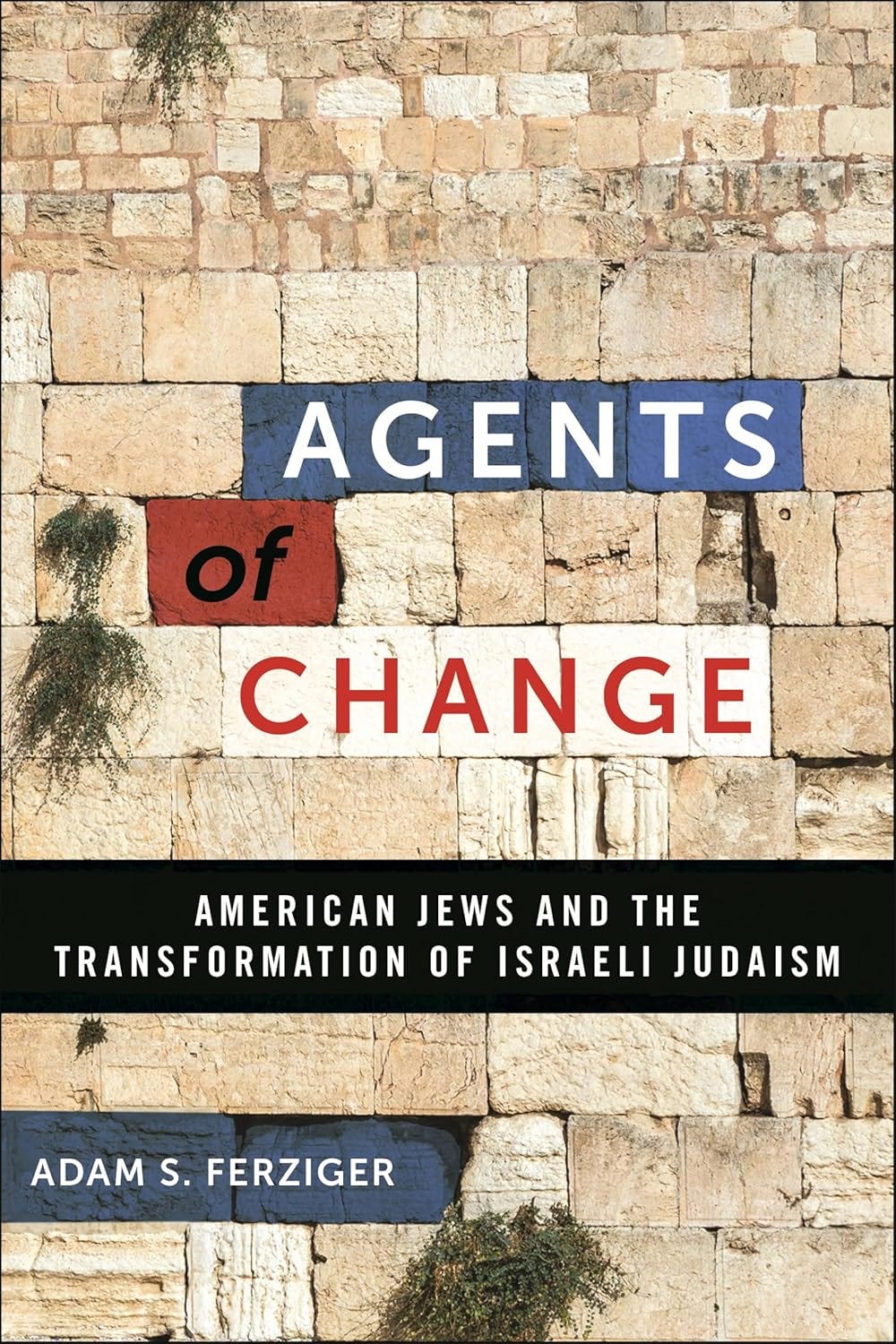
To those who look at Israel from abroad, traditional Israeli religious life might appear to be a monolith, but that is far from the case. And now, at long last, both for those of us who live here as well as those who do not, there’s a book by an important Israeli scholar (himself also an immigrant to Israel) — Professor Adam Ferziger — that lays out for us the profound impact that (especially) American immigration has had on the tapestry of Israeli life.

A quick reminder that with Pesach coming next week, we will be on a reduced schedule — as always during Jewish holidays — during the weeks of March 29 and April 5.
Out of consideration for our readers in the Diaspora who observe two days of Yom Tov at the beginning and end of the holiday, we will not post on those days.
Wishes for a joyous and meaningful Pesach.

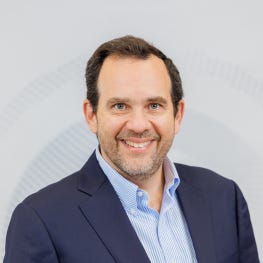
Adam S. Ferziger is professor and holds the Rabbi S.R. Hirsch Chair for Research on the Torah im Derekh Erez Movement in the Israel and Golda Koschitzky Department of Jewish History and Contemporary Jewry at Bar-Ilan University. He is a senior associate at the Oxford Centre for Hebrew and Jewish Studies, University of Oxford and co-convener of the annual Oxford Summer Institute on Modern and Contemporary Judaism.
His research focuses on the history of religious responses to modern and contemporary life in Western Europe, North America, and Israel. A past recipient of Bar-Ilan’s “Outstanding Lecturer” prize, Ferziger has served as a visiting professor or fellow in Australia, China, UK, as well as numerous American Universities. He is the author or editor of eight books, including Exclusion and Hierarchy (University of Pennsylvania Press, 2005), Jewish Denominations (Melton Institute – The Hebrew University of Jerusalem, 2012), and his monograph, Beyond Sectarianism (Wayne State University Press, 2015), was the winner of the National Jewish Book Award. His new book, Agents of Change: American Jews and the Transformation of Israeli Judaism (NYU Press) appeared in the summer 2025.
Professor Ferziger is an alumnus/graduate of SAR, Ramaz, Beit Midrash le-Torah (BMT), Yeshivat Har Etzion (Gush), YU (YC, RIETS, Revel), and Bar-Ilan. During the spring 2025 semester, he was the Robert Karady Fellow at the Herbert D. Katz Center for Advanced Jewish Studies of University of Pennsylvania.
Adam Ferziger and his wife Dr. Naomi Ferziger have lived in Israel since 1987, where they brought up their children and are now have several grandchildren. Ferziger was a congregational rabbi in Kfar-Sava and has dedicated over thirty years to performing weddings and providing religious services to a wide spectrum of Israeli Jews in a meaningful and nonjudgmental manner.
The link at the top of this posting will take free subscribers to an excerpted portion of today’s conversation.
For paid subscribers, the link at the top will take you to the full conversation; below, paid subscribers will also find a transcript for those who prefer to read, as always.

Adam Ferziger, my guest today, is a professor and holds the rabbi Samson Raphael Hirsch Chair for research on the Torah im Derekh Erez Movement in the Israel and Golda Koschitzky Department of Jewish History and Contemporary Jewry at Bar-Ilan University. It’s a mouthful, but you will hear very shortly that he is really an expert on some of the most fascinating dimensions of religious expression in Israel and abroad, or in the relationship between them. We’re going to put his full bio in the written notes for today, but he’s a senior associate at the Oxford Senior for Hebrew and Jewish Studies, University of Oxford, and the co-convener of the annual Oxford Summer Institute on Modern and Contemporary Judaism. His research focuses on the history of religious responses to modern and contemporary life in Western Europe, North America, and Israel. He has received Bar Ilan’s outstanding Lecturer Prize. He’s been a visiting professor or scholar in a whole array of universities that we’re I’m going to put in the written notes for today. A wonderful guy, a friend, and a person who’s always fascinating to talk with and listen to. Adam Ferziger has a new book out, which we’re going to hear about today.
I will just note that he and I are having this conversation on the second day of the most recent Israeli-Iranian war. So hopefully we’ll get through this conversation without having to run into a safe room. People listening may hear some jets overhead periodically. We haven’t had any in the last few minutes, but we had a lot of this morning, so we shall see. Adam’s newest book is Agents of Change: American Jews and the Transformation of Israeli Judaism. And that already probably has people raising their eyebrows a little bit. What do you mean, American Jews and the Transformation of Israeli Judaism? We often think of a couple of things. We think that it’s really Mitzion Tetzé Torah. We think of the stuff coming out of Israel and affecting Judaism elsewhere. We don’t usually think about it in the opposite direction. Or I think some people would say, actually, Jews have been pretty unsuccessful at transforming Israeli Judaism. We’re all aware that, I mean, right now the kotel issue is brewing once again, and the vast majority of American Jews and some Israeli Jews would like there to be some place at the kotel where American Jews could express themselves religiously in a way that felt respected and honored and so forth.
It doesn’t look like the moment, at least it’s going that way. The whole premise of American Jews and the transformation of Israeli Judaism seems counterintuitive. But if When you read Adam’s book and you read about all the various personalities who are very well known to some and probably a little bit less known to others of our listeners, you’ll see there’s been giants. I mean, men and women who are really giants in the world of Jewish communal life and educational of Life, who really have had an enormous impact on Judaism in Israel. It’s a fascinating topic. It’s actually, I think, a very optimistic topic, and we can all use that these days. Adam, thank you for coming over in the midst of sirens and all of that on the aftermath of a very interesting Shabbat where we all spent holdup in our safe rooms, and Mazel Tov on the appearance of the book, which came out this past summer.
Okay, Daniel, thank you so much. I feel safe here. I know where the room is, and I appreciate the invitation. I’m going to give a little bit of a basic view of the book, and hopefully, our discussion will get a little bit deeper into some of the critical moments within it. I’ll start just with a personal anecdote. My wife, Naomi and I, Dr. Naomi Ferziger, we arrived in Israel in 1987, and it was an election year, or ’88 actually was the election year, and that’s not that unusual in Israel. But that year, there was a new political party that was running. It was called Meimad. Meimad was running on a ticket that said, Religious Zionism, which is those who are dedicated to the state of Israel, but did not accept this secular Zionist, Ben Gurion, et cetera, approach. That religious Zionism, they thought had been hijacked since the ’67 war by people who were hyper-redemption-oriented people, people who saw Israel primarily through messianic lenses.
The Gush Amunim movement.
The Gush Amunim movement, the settlement movement. Even though some of these people might have identified with aspects of that part of the religious direction, what they found particularly difficult was the fact that somehow over time, that movement had morphed into a more hyper strict religious movement in terms of the roles of men and women. They had, in a sense, seemed be abandoning their ideological forefather, Rabbi Abraham Isaac Cook’s focus on the imperative of a partnership between secular and a religious Israeli in the building of the state. They were rejectionists towards secular learning and in a number of other areas. So the Maimad Party, which had rabbis in it, too, but it also had professors like Avi Rowitzky, Should Be Healthy, from the Hebrew University, Dr. Tova Lichtenstein, Rabbi Yehuda Amital, Daniel Trapper, Dr. Daniel Tropper, who will come up a little bit later. They were running, and they were a moderate religious Zionist approach that was, again, in contrast, also another area saw the influence and the contribution of diaspora Jewry as very important to Israeli society in its gestation. They saw university education as something which was beneficial to people who were committed religiously. They saw the partnership between secular and religious, between Orthodox, conservative reform, reconstructionist, all Jews who are committed and want to see Judaism grow as things that are positive and that could be navigated towards common goals rather than something that was just about competition.
They looked for compromises regarding issues like conversion in ways which could be satisfactory to all the parties. So they were running. I would talk to people and I was, I’m voting for Meimad, and I’m voting for Meimad, and I’m voting for Meimad. I was sure in the 120 seats, and the Knesset that Meimad was going to get 10, 15 seats? Well, in the end of the day, the elections took place and Meimad got a big donut, zero or a bagel, whatever you want to call it. No seats. What I realized was that in 1988, it wasn’t that everyone was voting for Meimad, but that I actually knew everyone who voted Meimad. Because Meimad was just this curious. It was a boutique. It was mainly supported by some Anglo immigrants and others who resonated with that approach, but it was really something that was avant-garde and not part of the mainstream. Let’s jump from 1988 till about 2005 or 2010. You look around, we’ve been living here again since 1987, almost 40 years. Here we’re about at the halfway point, and I start to see something different. I start to see all those voices that I elaborate on in terms of Maimad and others are starting to have a place within the discourse of Israeli society, within religious society, within religious Zionism, broader personalities in ways which are completely different, not necessarily in the political theater, but actually in broader society, in religious life, very prominently in the massive increase in appreciation for the role of women within Jewish life, both in intellectual circles, but also in the synagogue, leadership, et cetera, and many other areas.
Really, that’s the what we call in academia, the research question here. What happened? How did something which was so minor and seemed to be dismissed as just some product from abroad and not relevant, how did it turn into not the dominant religious discourse here, but a prominent one which features in Makor Rishon every week, which is the consensus weekly that’s read by the spectrum of religious Zionist Jews in that has a voice in the Supreme Court, in the Knesset, but certainly in universities, in synagogues, in Jewish learning throughout and abroad. So how did that happen? That’s the transformation. And I thought a lot about it. And like any historical phenomenon, there’s not one answer. But the answer that I lighted on that I feel is crucial, critical, central is these agents of change. So Daniel, with your permission, I’ll now I explain. So between the years 1965 and 1983, I identified eight individuals, men and women, who had common backgrounds in North America, came to Israel. So the common background is seven out of eight were trained in Yeshiva University. Most of them were students of rabbi Joseph B. Soloveitchik, rabbi Dr. Joseph B. Soloveitchik
The ‘rav’, as he’s called.
The rav, as he was called in the Orthodox circles, modern Orthodox the titular figure in modern Orthodox American jury in the mid-20th century. What made them so interesting in the Israeli context is that they all either founded or led maybe major centers for advanced Jewish learning. But that’s not enough, because it wasn’t just that they led these institutions, but they targeted their institutions at Israeli-born students. They had students from abroad, Gap year programs, all sorts of things. But what was transformative was that even though the majority of Israelis thought these people, like rabbi Dr. Aaron Lichtenstein, a Harvard graduate, he happened to be the son-in-law of Soloveitchik, but he wore tweed jackets, he was clean-shaven. He quoted from Milton and from Cardinal Newman and from C. S. Lewis.
Because his PhD was actually an English literature.
Lots of Israelis thought that he was like a foreign something. They’d be like a Martian. They didn’t know how to deal with him. But there were a bunch of Israeli students who were attracted to him. And later were attracted to rabbi Shlomo Stephen Riskin. And were attracted to rabbi David Hartman and to to rabbanit Chana Henkin, who started the Nishmat Institute, which is maybe the most influential because she’s trained Orthodox women rabbis. They’re called Halakhic consultants, but they’re essentially experts in Jewish family law. Really, that is a breakthrough and a commonality, which is a common discourse between the dominations, even though she would always say, I’m not doing a revolution, I’m doing an evolution. But most revolutions are much more effective if you call them evolutions. And a number of other figures will come up. But the key point in my book, and it’s predicated on what’s called transnational theory, is that When these people came, yes, they were outsiders. But their Israeli students internalized their ideas and processed them through the eyes of Israelis and recalibrated them, or some scholars would call it, they did a creolization of these ideas.
When they then became teachers, rabbis, professors, heads of yeshivas, heads of institutes for higher learning, they were teaching an Israelified version of what they had received from the American agents of change. And that is why only 25 years later or 30 years later, after these people arrived, did their ideas in their Israelified form start to really take root and start to be impactful on Israeli society. So that is really what my book is about. And then I show different examples. And in the last part of the book, I actually look at the boomerang effect, how over time, actually, some of these Israelified, so to speak, ideas have made their way back into North America and are having deep impact on American society. How’s that first start, Danny?
That’s a great start. We want people to read the book. We want people to go ahead and read the various people that you’ve talked about in a I mentioned even briefly now. I want to zoom out a little bit and ask you something about what, give us a sense of what are some of those Central American ideas that they brought with them and what’s the Israelified version look like? Or to put it a little bit differently, if I was going to snoop around Israel now and go to the various places where you think I could see the impact of all of this, what would I see that is different than it would have been in Israeli society had it not been for agents of change, as you call them?
That’s great. Thank you. That’s actually, in a way, a way to get to that second part of the book. I’ll give a few examples. Some of them are, I could just say in a sentence, and one or two, maybe I’ll expand upon. So one of them is just the attitude towards non-Orthodox denominations, and Jews who are very identified Jewishly but are not necessarily do not necessarily articulate that through their observance, et cetera. Attitudes towards biblical criticism and the role of biblical scholarship in Jewish life. Leadership, just the preponderance, and I even have a chart of rabbi doctors in Israel today, and maybe even more among women who, in orthodoxy, at least, are not given the license to a full rabbinical smicha ordination, but you see them having this, you see this combination of Yoetz Halakha, halakha consultant, and doctorate in something. That really changes their whole approach to academia, to society, to non-Jewish learning, to non-Jewish ideas, to broader society. Interestingly, I have a chapter here actually about the reception of maybe the most popular book on Bible and Religion, in books on Bible and religion in Israel today, which is Jonathan Sacks. Jonathan Sacks, rabbi Lord Jonathan Sacks, the former chief rabbi in the UK, is maybe the most popular Jewish author today in the spectrum read by all the different denominations and certainly a superstar in the modern Orthodox spectrum. I would argue, and I can really back this up, that if his books had appeared in 2000 or 2005, they would have They would have been pushed away. The fact that they arrived a little bit later, or certainly in the 1990s, they would have been brushed away. But when they started being translated in 2013, there was an audience. When they were translated in Hebrew, of course.
Right, because it took him a lot more time. People will raise their eyebrows and be surprised by Jonathan Sacks. He’s like, Everybody knows him. Israel, he’s just making his way in now.
And yet, when you go to the what they call Shavua Ha’Sefer, the Jewish Book Week, it’s like hotcakes. They’re selling those books to everybody. And I’ve approached the Stymatsky booksellers and all the major booksellers, and they say they sell them online, they sell them in the stores, and they don’t sell them particularly in religious neighborhoods. They don’t sell them particularly to people who are outwardly identified with religious Zionism. But I found an article from 2013 when his first book appeared in the Hebrew language, where Someone titled the article, ‘The tragedy of Rav Sacks’, the tragedy was the tragedy that this guy is so enlightened and so thoughtful and so integrationist and so synthetic in the way that he presents this his insights on Judaism. And nobody in Israel is going to read them because they’re so monolithic in the way that they think about Jewish life. And here, 10 years later, he’s a superstar. So something changed. And this person in 2013 didn’t realize that it already started. But I do want to say something about one of the people who’s really a critical one, because in the early chapters, I give names to the different eight agents of change.
One of them, who I mentioned already, rabbi Lichtenstein, there’s a chapter there about how he perceived his relationship to Jews who were different than him. I argue there that there have been so-called tolerant models that have emerged. I wrote a previous book about the the tolerant models that emerged in the 19th century. It’s entitled Exclusion and Hierarchy. It was published by University of Pennsylvania Press, 2005. But that, rabbi Lichtenstein’s approach is a original, different than any of them. I’ll just say it in two sentences. The approach that was dominant was, I would call it a totalistic approach, which was predicated on this idea of of religious ignorance, what they called the infant taken captive, which was that today all these negative things that appear in the Talmud or in religious codes about Jews who are not observant aren’t relevant. The reason they aren’t relevant, because in those days people, when they chose not to observe, they did it out of knowledge. And today it’s a lack of knowledge. So the great author Amos Oz already said, famously,’Call me evil, call me a rasha, call me an apicoras, call me a heretic, call me a mean. Whatever you want to call me, don’t call me a baby.’ Don’t infantilize me. Don’t look at me as if that my volition. My decisions are based on ignorance, are based on being an infant.
You just didn’t know any better.
You didn’t know any better. That was really the predominant approach. You see it in the Chazon Ish, you see it in Rav Cook, you see it in all these different things. Rabbi Lichtenstein articulated what I call fragmentary Judaism. He basically said, Stop looking at people, whether they’re observant, haredi, modern Orthodox, reformed, conservative, reconstructionist, secular, wherever they are in the spectrum of Jewish identity, stop looking at them through these total categories and just saying, Oh, they’re secular. Oh, they’re reform. Oh, they’re homosexual. Oh, they’re whatever it is. That’s the prism. He said, If you look at Jews through the fragments, you’ll find, he says it’s straight out, you will find things that I think my Orthodox approach, he would say, is a very critical and foundational, and I’m very proud of it. But there are other things about my Orthodox world that I find problematic. The same thing when I engage with my fellow Jews who are conservative or are secular, there are things that I’m jealous of them of, or I certainly am enamored by. Instead of once we pull it apart and we look at it from a voluntary, we have the potential for embracing each other, learning from each other in a reciprocal manner, and not excluding, not looking at it as a zero sum binary.
I found that, very importantly, when it comes to issues of gender, when it comes to issues of sexual identity, When it comes to issues of dominations, this approach down the line appears in his writings. That’s something that I’m seeing in different forms trickling down to the way many people within the religious Zionist world look at their fellow soldiers or their fellow classmates in university or their fellow high tech workers. I think that they might not do it in a theoretical way the way Lichtenstein did, but I think he really set that pattern. That would be, I think, an important example.
Let me ask you a couple of about how far this actually does penetrate, because people that read the book will read about all the various people that you’ve spoken about who are critically important people. So one of my questions is, first of all, about Ashkenazi versus Mizrahi. In other words, has the filtering, the Mizrahi are more than half of Israel now, and it looks like the gap is only going to grow. So right now, they’re 52, 53%, probably in a decade or two, it’ll be 60%. It’s going to be more and more Mizrahi. There’s a lot to be said, by the way, for why that may be a very good thing in a lot of ways, because almost the tolerance that you’re talking about is built in to Mizrachi life, which is much more about reverence than it is about, let’s say, obedience or hardcore philosophical distinctions and so on and so forth. But have these ideas of Rabbanit Henkin and teaching women or or Rav Lichtenstein at the Gush, have they filtered into the Mizrahi world as much as they have into the Ashkenazi world? If they haven’t, I don’t know what you’re going to say, but if they haven’t, what would it take for that to happen?
That’s interesting. In as much as there were two assumptions that you said, Daniel. On one hand, you said that they are becoming the majority. On the other hand, you said, have they filtered into that world? There’s actually a funny contradiction there. Is it still a world? I think yes or no. I think that I would say in a formal sense, less. If you look at political parties or if you look at educational institutions that are identified with the classical, or maybe we’ll call it the contemporary, Sephardic-Orthodox approach, I don’t think that they buy in in an ideological way to some of these ideas. However, and I think this is what you were really alluding to, I think that that distinction is is generalationally becoming less and less significant. Here I can talk about personal experience. We are privileged to have six children. Half of them are married to Ashkenazi kids, and half of them are married to kids from Middle Eastern or Yemenite or et cetera background. If I can say this in a way which is appreciative and not, God forbid, looking at it as in a almost hypercolonial way, I think it enriches our home, it enriches our family, it enriches our conversations, it enriches everything that we do.
But ultimately, it’s not about Ashkenazi and Sephardi, it’s about what we call Israeli Judaism. And there, I think that the impact is tremendous. Israeli Judaism, which is not hyper redemptive fundamentalist settlement to orthodoxy, but rather is the majority of Jews in this country who are also not hyper secular and not antagonistic to religious traditions and life. And most of those people want an Israeli religion which has two parts to it. One is reverence and openness to the ability to express oneself as a religious, not necessarily an Orthodox. I don’t know how you want to describe it, but within the Orthodox tradition, the non-Orthodox denominations have not planted the seeds that maybe were expected. They have had some impact. There’s a chapter here about Beit Daniel, an amazing synagogue center in Tel Aviv, and what they’ve done. There are examples, but they’re local. They’re not national. On a national level, Israelis are, they’re very, kind of Catholic about their religion in the sense that they want that tradition. They want a sense they don’t want to feel like they’re pulling away too far, but they’re not necessarily demanding of themselves in the personal observance level.
That’s something, yes, that maybe is more normativized within Sephardic religion. But I think today it’s part of the approach of many, many kids who grew up in observant homes. Some of them were personally observant, but their attachment to other Israelis is in many ways more fundamental to who they are than their ponticulus approach to observance. The other piece of this, and this is one which is challenging for many of our friends who live abroad.
Which I want to come back to in a second.
Is that Jewish sovereignty and the sense of Israel, the country, as being not just a political identification but rather at the foundation of who they are as Jews and as religiously committed or reverent or involved Jews is something which is often I find in my conversation, certainly with my academic colleagues, in anathema, and there’s a lot of pushback today in America to that. But that is certainly part. But it’s not a fundamentalist extremist religious approach, but rather this interesting moderacy that I would call it the normative life of being a Jew in a country where after 75 years of speaking Hebrew or when it’s 77, speaking Hebrew and living the Jewish holidays as the main public holidays, et cetera, et cetera, that is what is emerging. In ways, I find my friends abroad see that as beautiful and attractive. Maybe the vision of our parents who went to the Hertzlia School or studied with all the hebreaces of a generation ago. But some people find that concerning because they don’t really understand how state and religion go together, and they even push back against it. But that is a discussion that we’re all very heavily in today.
So speaking of conversations that we’re heading today, I mean, obviously, we’re having this conversation during a war, and it’s a war that is polarizing, certainly in the United States. I mean, interestingly, by the way, it’s In Israel, it’s not polarizing at all. I don’t know a single Israeli who’s not in favor of us having this war and who’s not pleased that we’re able to take out whoever we’re able to take out and finally get rid of the ballistic threat. But if you look online, and I’ve been following it online as I’m sure you have, there’s a lot of voices out there in the American Jewish community to say, Why is American getting involved in this? This is an unprovoked attack, and blah, blah, blah. It’s a very different worldview.
You, I think, you’re more optimistic than I, and perhaps because of the research, or maybe because you’re more optimistic, you did the research. I don’t know what’s the chicken and what’s the egg. Maybe it’s both. But you are, I think, more optimistic than I am about an ongoing, meaty, mutually enriching relationship between diaspora Jewry and Israel. I am less convinced that it’s possible. I’m a 1000 % convinced that it’s desirable. I’m just not as convinced that it’s possible. But I think people listening would be super interested to hear your take on what all of this might mean for the future of a rich, thoughtful, mutually enriching relationship between diaspora Jews in Israel.
Okay, so thank you. And there’s no question. I wrote this book because over the course of a few years of doing research, I started to see this line, this stream, this voice that I was identifying in different categories. I realized that it was something that needed to be articulated as a broader analysis narrative of Israeli society and that no one had done it. After I started to write the book, two things came out, and if I may, one is that I realized that in many ways this book is about education. It’s about planting seeds. Because the argument, again, is that these Israelis went to these different institutions, and over time, they first internalized, then they reacted, recalibrated, and then took it into action. That’s what education is about. If anything, it’s a plug for the people who are wondering, what is all this investment that we do in Jewish studies, in Jewish learning, in online learning, in all these Hadar, Hartman, all these places that are picking up steam, maybe a little bit in America today, I think it’s powerful. I think it’s palpable. I think that you see, not because people are going to duplicate, but they’re going to run with it.
It’s a hedge in the sense that it gives people a basis of knowledge, but also a basis for their own growth. I think that’s important. The other thing, though, is, and here I’ll refer back to Hartman for a second, because Hartman is a really interesting institution. There are a few institutions, just generally, that I find interesting right now that they’re more transnational. One is Hartman, another is actually Hadar, maybe a little less familiar to the listeners.
Both of which really have the roots in North America.
They both have their, well, yes and no. In other words, these are boomerangs.
The people who formed them were themselves shaped in North America.
Hartman is David Hartman.
He’s Canadian and American.
He was a student of rabbi Soloveitchik. I’ll tell a very cute story about him for one second. David Hartman was once actually very vociferously Orthodox, but then he became known as the bad guy of modern orthodoxy.
Which is the role that he liked.
Yes. My friend and colleague, Professor Lawrence Kaplan from McGill, translated rabbi Solvayczyk’s book in 1981, Halakhic Man. He was sitting in outside Solvayczyk’s office waiting to show him the galleys before it came out. Out walks David Hartman, who people thought was the nemesis of Solvayczyk’s students, et cetera. Kaplan walks in, Solvayczyk looks at Kaplan and says to him, Do you know him? He says, Yeah, sure. That’s Davy Hartman, David Hartman. He says, What do you think of him? Kaplan said to me, What do I think? What do you think of him? So Rabbi Solvayczyk said, so Kaplan said, he’s very smart, he’s very prolific rabbi, whatever. People think he’s radical. Probably Solvaychik looks at Kaplan and he says, Hartman, he’s a searcher, needs discipline. I like him. So it’s interesting. So Hartman comes to Israel the same year as Lichtenstein, 1971, and eventually, starts many graduates of Lichtenstein who were a little bit more radical than Lichtenstein would go, the Shalom Hartman Institute, which today is so interesting in what they’re doing in Israeli society.
But leaving that aside, and a lot of that is in the book, through Yehuda Kutzer, who is now the President, co-President with Daniel Hartman, David Hartman’s son, their expansion in America, it’s like they took Yitz Greenberg’s idea of Klal from the 1970s and ’80s, and somehow, American Jewry in a maybe semi-post-denominational era was more ready for it, and Hartman is expanding all over North America. But the reason I’m saying this is because Hartman is that hybrid. He’s interesting. It’s an American who came to Israel and created this multifaceted institution in Israel, which has had a lot of success in many ways and bridges the gap in many ways between religious Zionism and moderate secular Zionism. And now the boomerang, going to America. Actually, Yehuda Kutzer, the head, was here a little bit after October 7th, and he wrote this column that I found very informative in terms of this question of relationship because I don’t want to be sanguine. I don’t want to be like, Oh, yeah, now we’re all friends, and that’s not the way I do it. It’s a scholarship. It’s not the way I look at the world.
I look at the world more through conversation. Is there enough there that we share enough and enough mutual respect to be in conversation? So he wrote this article, which I thought was sad. He’s talking about this teacher from, a principal of a school in Israel, Yossi Herschkowitz, who was killed early in the war, had a bunch of kids. He had been an educational emissary in an S.A.R. Academy where Kutzer,’s kids go. And then he came back to Israel, he became a principal of the Pelech Boys School, and he was killed. And everyone found out after Shabbat, everyone was very upset. Kutzer, writes this article about how in many ways, as much as we feel connected to Israel, and the Hartman Institute is global, and I’m here now, but the connection, it’s not symmetry, and it would be almost an insult to the complexity of that relationship to describe it as symmetry. He says the following. He says, I feel parallel or adjacent to the principle of Pelech, but I have no proximity to his choices, and thus, maybe despite the bonds of peoplehood, we are not parallel but perpendicular. A beloved Jewish educator is killed, how do we confront the magnitude of the loss? And he goes on. And we here turned about perpendicular. We teach Torah, et cetera, but in a different way. So I find that really pungent and really helpful. How can this perpendicularity of our relationship, our global relationship between Jews in Israel and in other places, particularly the great center of North America, be a productive, mutually respectful one? And I think what Kutzer, what really underlines his comment is the appreciation for the assumption that there are certain fundamental aspects of everyday life in Israel and in America which are different. And there are ones in which there is overlap, and there’s a tremendous means for conversation. My book is not about politics, and I don’t think politics aren’t important. They’re important, but they’re not the whole story. And part of what my book is about is just giving the information that these moderate people exist and that there’s what to talk about with the Seth Barbers of the world or the Benny Laus of the world or all sorts of women, Esti Rosenbergs of the world who are doing amazing things in Israel, and they don’t all agree with each other. That’s okay. But there are people who can be in conversation with reform Jews, with Jews who identify more culturally. I think it’s a very productive conversation, which does not take place enough. I think that together with some of the other things that Daniel pointed out here about the winnowing of this Sephardic-Ashkenazic divide, I think you implied that, are things which do give me optimism and hope, together with being very realistic and grounded about the areas in which there’s a lot of debate and even dissension between the different groups.
I want to ask you one last question, which in and of itself is a whole world, so we’ll just make it. We’ll try to keep it brief because you can probably write a book about this. But basically, all the people that you point to in the book are essentially somewhere within the Orthodox community. It’s not a book about the influence of Non-Orthodox Jews in Israel. It’s a book about the influence of Orthodox Jews in Israel, how they’ve changed education, Jewish identity, religiosity, and so on and so forth. Here’s a hypothetical, and I know that people with your academic background don’t like hypotheticals. You deal with data and stuff that’s actually real. But you hear so many Israelis, you have heard this as many times as I have. People that went on this program or that program, they went to America for six months, they went to America for a year, and they will say, I’m I never stepped foot in a synagogue in Israel. In fact, maybe literally, I had ever been in a synagogue. But I went to Harvard, I went to MIT, I was in Cambridge, I was in Somerville, I was in Boston, or I was in Columbia, New York, wherever.
I lived there for a while and I needed some Jewish whatever, and I went into a reform synagogue or I went into a conservative synagogue, and I found a way of being Jewish that I didn’t even know existed. I actually felt comfortable in Temple Beth Elohim in the Greater Boston area. It was very Zionist, it was very embracing. It was completely not judgmental in terms of anybody’s observance. What would happen if a million non-Orthodox Americans came to Israel? Do you have a sense, based on your extensive study of the influence of American orthodoxy on Israeli orthodoxy and then life beyond, that if we had a massive infusion of non-Orthodox American Jews in Israel, the same influence could be had in other areas, or do you think it was particularly a an orthodox nexus between the American and Israeli communities that allowed that influence to take root?
I love the question, and I also love the fact that you already said, Oh, I know you’re an academic, so I get that you’re, okay, but I don’t mind engaging it, but it’s just a little bit, this isn’t going to think as real. I want to think with you about it because I love thinking about it. We’ll start with the fact that I think the influence on Israeli society would be tremendous. If you see, relative to other immigration groups, the Anglos are a small group, but their impact is significant because they get involved, because it’s an ideological immigration. It’s not financial or purely running away from persecution. Those are usually the causes of mass immigration. But when you have a group that really is is identified and cares and sees Israel not as a fate incomplete, but as the great experiment in Israeli society, in Jewish history, and says, Well, I want to be part of that experiment. Maybe I can impact the results. Then good things happen. If that’s a plug, Yala, as we say in Hebrew. I don’t know. I think that the structure that really started, and I’ve written books about American Jewish history with Protestantism in America, is what defined the denomination relational divide.
And I don’t think that really would work in Israel. And I think that was one of the things that very, very bright people who I love dearly, who I’m friendly with or my dear friend of blessed memory, one of my people who’s my role models in the world, David Ellison, who Daniel and I have sat together, the three of us with David, and we loved him. But as much as he really knew Israeli side, well, I think that they were very optimistic that non-Orthodox jury could evolve in the way that they’re in America. I think that as a historian, I think that it’s just different context. Having said that, it’s really interesting, actually, to see some of the, not only Daniel, but I can name about 10 really superstar JTS graduates and HEC graduates who came to Israel, understood the landscape, and they decided, no, they’re not going to focus on trying to make sure that alternative streaming streams work here, but within, we’ll call it the traditional stream, to create apertures for more moderacy, more openness. I think that it’s interesting. What I do in history is mostly, once I got the facts, is try to do a lot of comparative study.
Not because I think anything’s the same. I don’t believe the more things change, the more they are the same. What I think is there are enough similarities that you can identify the differences. But if you take a look at some smaller juries like South African traditional Jews or Australian Jews who have come to Israel, and where they found their place, and you find that some landed in secular and some landed in the moderate religious Zionists, that might be the scenario. I’m not sure. A million is a huge number. So a million, look at the Russian. If you’re talking, let’s be realistic. If there are 100,000, I think that they would have a very strong influence. Would Don’t you mind, though, because you said this is the last question, if I actually end with a citation? Because I think that I really enjoy talking. You’re right, we could talk about this for a long time, but there is no question that when, I just want to say two statements. One is that when these people came in the ’60s, ’70s, and ’80s, like the way that Israelis were ignorant about, are ignorant till today, for the most part, about conservative reform Jewry, they were ignorant modern orthodoxy.
But over time, through education, through their work, it’s not the case anymore. I think that to a much lesser extent, and it’s more widespread, we didn’t really talk about that that much, but we could. I want to give an example of that. I absolutely agree with you that if people come and they create institutions and they invest and they’re part of society, it’s going to affect it. But I want to just go to this question that Daniel asked about, is it widespread? This is a very sad example, but I think it resonated with me, at least. In August of 2024, terrible thing happened. Eight hostages were found dead in Gaza. The one who has become most well known, certainly in the North American community, was Hirsh Goldberg Polin of blessed memory, who grew up in this neighborhood, so very fine kid, who was murdered, and his parents, Rachel and John, have really been such great examples of the moderate Judaism that we’ve been talking about for the last few minutes. I found an article by someone named Michel Tzion, who’s also a Hartman, an affiliated who’s rabbi of a synagogue in Arnona, not far from here.
It happened to be that about two weeks after this terrible tragedy, he was invited to a Tel Aviv TV station for an interview about something. This was a very secular TV producer who looked at him. He wears a kippa, he wears a Yamaka. After the interview, typically Israeli in your face way said, in English. Wait, what type of religious person are you exactly? I don’t care. I’m going to ask him. Michel Tzion looks at this TV producer who is not connected to the religion and says, You heard of Hirsh’s parents, Rachel and John, from Jerusalem. So I’m religious like them. And from the look on her face, he writes, I immediately felt that she understood. But that understanding is not just because of two weeks before. It means that there’s something that has seeped in. And then he goes on to say, “the Goldberg Polin’s form of Yiddishkeit, or Homie Judaism, was ethically bound in the infinitely valuable image of God imbued in all humans. A Judaism of people at home in the world without giving up one ounce of their religious commitment. A Judaism of humility and peace starkly different from the arrogant religiosity that is often portrayed and stereotyped in media and politicians.” So with all the tragedy and sadness of that story, seeing how this Israeli producer could grasp that, I think that that supports the overall phenomenon that I’ve tried to explain here.
Okay, well, that’s quite the way to end the conversation because the alarms are going off. The siren is going to go off in a second. Adam Ferziger, thank you very much for taking this time to have this conversation. It’s really an extraordinary book, and I urge people to read it. Once again, Agents of Change, American Jews and the Transformation of Israeli Judaism. I think if people before this conversation had been asked, in what ways have American Jews impacted Israeli society at all? They would have thought of Golda Meir, Abba Eben, but they wouldn’t really have been able to point to things in Israeli society that really are very different because of all these American Jews. And thanks to you and thanks to your book and this conversation, now they can. And now that the alarm has gone off, we have to get up and go to the safe room. So thank you very much for taking the time.
Thank you and be well, Daniel. Thank you very much.