

Please consider supporting our mission to help everyone better understand and become smarter about the Jewish world. A gift of any amount helps keep our platform free of advertising and accessible to all.
This is a guest essay by Vanessa Berg, who writes about Judaism and Israel.
You can also listen to the podcast version of this essay on Apple Podcasts, YouTube Music, YouTube, and Spotify.
In November 1979, a group of Iranian revolutionaries climbed over the walls of the American embassy in Tehran and took 52 U.S. diplomats hostage. It was a brazen act, but also a test — of a new regime’s willingness to confront the United States, and of America’s willingness to respond.
For U.S. President Jimmy Carter of the Democratic Party, that test would define his tenure. For the new Islamic Republic of Iran, the outcome would define something even more important: how far it believed it could go.
What followed was not a decisive assertion of American power, but a prolonged effort rooted in restraint, negotiation, and caution. The Carter Administration pursued sanctions, froze Iranian assets, and relied heavily on diplomatic channels to secure the hostages’ release, while avoiding actions that might escalate the crisis.
Yet as months turned into more than a year, diplomacy failed to produce results, and a last-ditch military rescue attempt collapsed in disaster, killing eight American servicemen and further undermining U.S. credibility.
The crisis revealed more than a tactical failure; it exposed an emerging pattern, reflecting a broader post-Vietnam War, increasingly “progressive” view of American power — one that prioritized restraint over confrontation and assumed that even hostile regimes could ultimately be managed through pressure and engagement.
Iran drew a different conclusion. It learned that the United States, despite its strength, could be constrained, delayed, and outmaneuvered. And in that lesson, learned at the very beginning, lay the foundation for decades of escalation to come.
When the Iranian Revolution overthrew the Shah and brought Ayatollah Ruhollah Khomeini to power in 1979, much of the Western world struggled to interpret what had just happened. In parts of the United States and Europe, particularly within Left-leaning political and intellectual circles, the revolution was filtered through familiar narratives: anti-imperialism, popular resistance, liberation from authoritarian rule.
Up until that point, the Shah had been backed by the West; his overthrow, therefore, could be understood as a kind of corrective. What was less fully absorbed, or at least not sufficiently acted upon, was that this was not merely a political revolution but an ideological one — a theocratic project rooted in a revolutionary vision that explicitly defined itself in opposition to the United States, Israel, and the broader Western order.
That initial misreading did not immediately produce catastrophe, but it established a framework that would persist: the belief that Iran, like other states, could ultimately be engaged, moderated, and gradually integrated into the international system.
Throughout the 1980s and 1990s, this assumption expressed itself in policy decisions. In the United States, President Bill Clinton of the Democratic Party pursued a dual-track approach: containing Iran through sanctions while avoiding full-scale confrontation, to leave open the possibility that internal change within Iran (especially under so-called reformist figures) could eventually alter the regime’s trajectory.
In Europe, the logic of engagement was more explicit and more sustained. Governments led by parties such as Germany’s Social Democratic Party of Germany and the United Kingdom’s Labour Party were central to what became known as “critical dialogue.” Leaders like Helmut Kohl and later Gerhard Schröder, along with Britain’s Tony Blair, supported sustained diplomatic engagement paired with expanding trade ties. The European Union as a whole institutionalized this approach, maintaining open channels with Tehran even after crises such as the Mykonos assassinations, in which Iranian operatives were implicated in murdering dissidents on European soil.
France followed a similar path under leaders like François Mitterrand of the Socialist Party, balancing criticism of Iran’s actions with continued diplomatic relations and commercial engagement. Across the continent, the prevailing belief — shared most strongly among Center-Left and social democratic parties — was that isolation would harden the regime, while dialogue and economic integration might gradually empower more moderate elements within it.
This approach reflected a broader worldview that was gaining strength in the post–Cold War era. Economic interdependence was seen not just as a tool of prosperity, but as a mechanism for peace. Trade would soften regimes. Diplomacy would create incentives for cooperation. Over time, exposure to global markets and institutions would encourage political evolution.
It was a hopeful framework, and in many cases around the world it produced real gains. But in Iran, it ran up against something far more rigid: a regime whose identity was not merely political, but ideological and religious, and whose legitimacy was tied in part to resisting precisely the system it was being invited to join.
While Western policymakers debated engagement, Iran moved with clarity. It consolidated its internal power structure, sidelining reformist currents when they threatened the regime’s core identity. It built and expanded a network of regional proxies, from Hezbollah in Lebanon and Hamas and Palestinian Islamic Jihad in Gaza and the Houthis in Yemen to militias in Iraq and Syria, embedding itself across the Middle East. It invested in missile technology and, critically, pursued nuclear capabilities that would alter the strategic balance of the region. None of this was hidden. It unfolded gradually, often incrementally, but consistently.
The tension between what Iran was doing and how the West chose to respond became more pronounced in the early 21st century. After the Iraq War, there was little appetite in the United States or Europe for another large-scale conflict in the Middle East. This fatigue reinforced a preference for diplomatic solutions, even as Iran’s regional influence expanded in the vacuum created by Saddam Hussein’s collapse. By the time Barack Obama entered the White House, the dominant strategic question was no longer whether to engage Iran, but how.
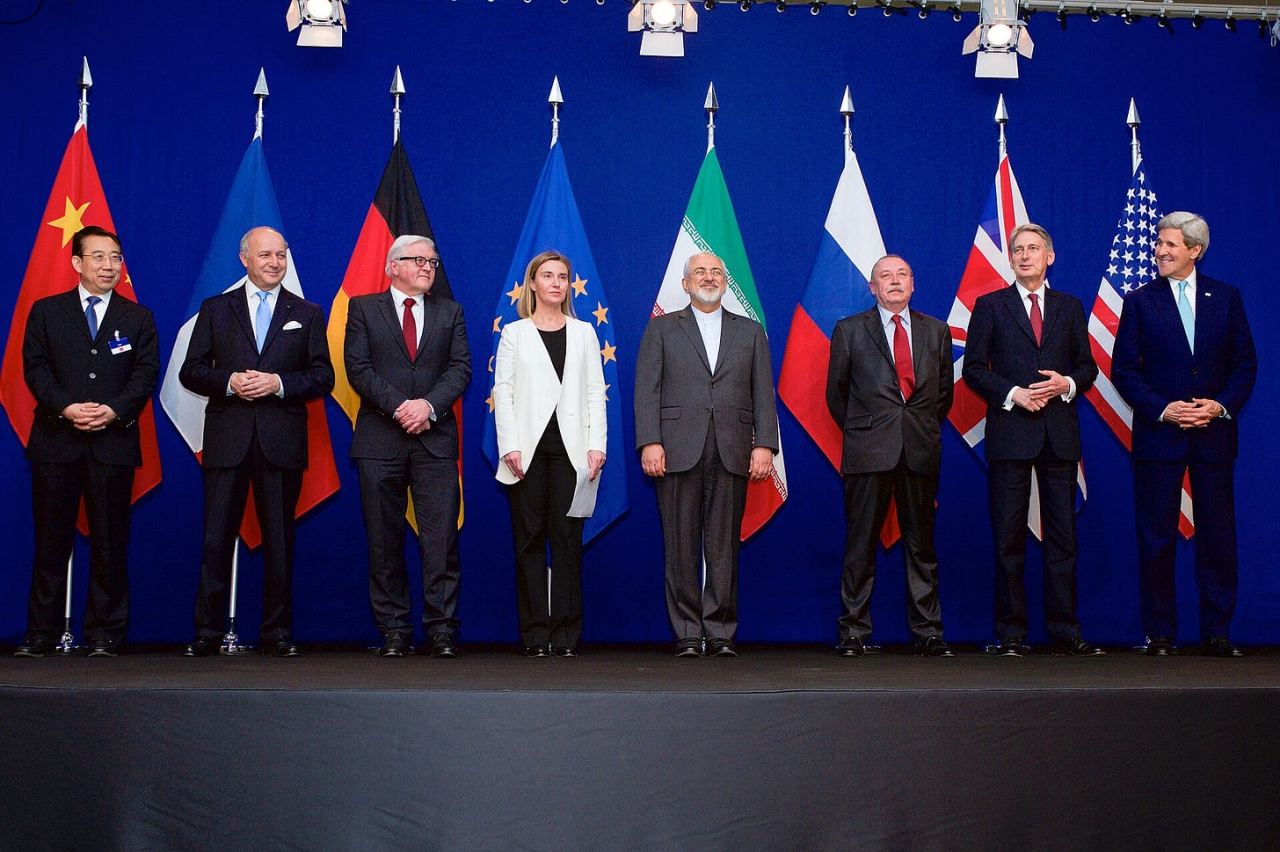
The answer came in 2015 in the form of the Joint Comprehensive Plan of Action, the nuclear deal that sought to place verifiable limits on Iran’s nuclear program in exchange for sanctions relief. The logic behind the agreement was coherent and, in many ways, compelling. Iran’s nuclear ambitions posed a clear risk; war was an unattractive option; therefore, a negotiated constraint, backed by inspections, offered a pragmatic path forward.
“If Congress kills this deal … then it’s the United States that will be blamed for the failure of diplomacy. International unity will collapse, and the path to conflict will widen,” Obama said at the time. Earlier, he told Iranians that they “deserve better” leadership and that a comprehensive nuclear deal could help move Iran toward “a new path that so many Iranians seek.”
More than that, the deal reflected a deeper belief: that by bringing Iran into a structured agreement with the international community, you could begin to shift its incentives, opening the door to a less confrontational relationship.
But embedded within that logic were assumptions that would prove difficult to sustain. The restrictions in the agreement were not permanent; key provisions were designed to expire over time. The deal focused narrowly on the nuclear issue, leaving Iran’s missile program and regional expansionism largely untouched. And the economic relief it provided, while intended as leverage for moderation, also strengthened the regime’s capacity to operate both domestically and abroad.
Supporters of the agreement argued that it successfully delayed Iran’s nuclear breakout capability and created unprecedented transparency. Critics countered that it effectively legitimized a pathway to nuclear threshold status while failing to address the broader architecture of Iranian power. What is clear in hindsight is that the agreement did not resolve the underlying conflict; it delayed it, temporarily, within a fragile framework that depended heavily on continued political alignment among the United States and its allies.
Europe, for its part, remained deeply invested in that framework. Countries like France, Germany, and the United Kingdom saw the deal not only as a nonproliferation success, but as a model for resolving complex international disputes through multilateral diplomacy. There were also economic incentives: the reopening of Iranian markets presented opportunities that European businesses were eager to pursue. Even as concerns grew over Iran’s missile tests and regional activities, the priority in many European capitals was preserving the agreement itself.
To understand how the Joint Comprehensive Plan of Action came into existence, you have to look beyond the agreement itself and examine the broader worldview that shaped Obama’s foreign policy. The deal was not an isolated diplomatic achievement; it was the natural outcome of a strategic philosophy that sought to redefine America’s role in the world.
Obama entered office deeply influenced by the failures of Iraq and Afghanistan, determined to avoid new military entanglements and convinced that the United States had over-relied on force at the expense of diplomacy. His administration emphasized negotiation, multilateralism, and economic leverage, operating under the belief that even adversarial regimes could be managed through sustained engagement. Iran became the central test case for this approach, grounded in the assumption that the regime, despite its revolutionary ideology, was ultimately rational and could be incentivized to alter its behavior through a combination of pressure and opportunity.
This strategy unfolded through a dual-track approach that combined sanctions with diplomacy. On one hand, the Obama Administration maintained and intensified economic pressure, helping to push Iran toward negotiations; on the other, it pursued unprecedented backchannel talks, particularly through intermediaries like Oman, signaling a clear willingness to engage directly.
Yet from the outset, the scope of these negotiations was deliberately narrow. The focus was almost exclusively on Iran’s nuclear program, while other critical elements of its behavior — its support for militant proxies across the Middle East, its ballistic missile development, and its broader regional hegemonic ambitions — were largely set aside.
This decision to compartmentalize the threat reflected a key assumption: that the nuclear issue could be isolated and resolved independently, creating space for broader change over time. This was not just a tactical choice, but a strategic concession, one that allowed Iran to continue expanding its influence even as it negotiated limitations on its nuclear activity.
At a deeper level, the most significant critique of Obama’s policy lies in its underlying assumptions about the nature of the Iranian regime. Iran’s power structure does not operate like a typical political system. Real authority resides not with elected officials, but with entrenched institutions and leadership figures committed to preserving the ideological foundations of the Islamic Republic. In that context, the idea that economic incentives would fundamentally alter the regime was, at best, optimistic and, at worst, misguided. The deal may have constrained specific activities, but it did not — and likely could not — change the regime’s core identity or long-term ambitions.
But Obama’s foreign policy wasn’t just about avoiding war or negotiating a nuclear agreement; it was also shaped by a distinctly “progressive” worldview about how the international system works and how the United States should operate within it.
First, a skepticism of American power as a unilateral force for good. Obama frequently emphasized the limits of U.S. influence and the unintended consequences of intervention, particularly in the wake of Iraq. This translated into a foreign policy that was less about projecting dominance and more about sharing responsibility through multilateral institutions. In the case of Iran, that meant prioritizing alignment with European allies and global consensus.
Second, a belief in moral equivalence (or at least moral complexity) in international relations. Obama tended to frame adversaries as actors shaped by history, grievances, and incentives. Applied to Iran, this meant seeing the regime not just as an ideological opponent, but as a state reacting to decades of isolation, sanctions, and Western interference. The implication was that if those pressures were adjusted — through diplomacy and economic integration — Iran’s behavior might evolve.
Third, a strong commitment to engagement as a transformative tool. This is a hallmark of “progressive” foreign policy thinking: the idea that bringing countries into the global system — economically, diplomatically, culturally — can gradually reshape them from within. The Joint Comprehensive Plan of Action wasn’t just a nonproliferation agreement in this view; it was a first step toward a different kind of relationship between Iran and the West.
If you believe adversaries are primarily responsive to incentives, you may underestimate the role of ideology, especially in a regime like Iran’s, where hostility toward the U.S. and Israel is not just strategic but foundational. If you believe engagement drives moderation, you may overestimate the impact of economic integration, particularly when the most powerful actors within a regime benefit from resistance rather than reconciliation. And if you are deeply wary of using force, you may weaken deterrence, even unintentionally, by signaling that escalation will be avoided at almost any cost.
Over time, the contradictions that had been building for decades began to converge. Iran’s nuclear program had advanced significantly. The diplomatic frameworks designed to contain it had weakened or collapsed. Regional proxy conflicts intensified, creating a web of low-level war that stretched across multiple countries. Trust between Iran and the West was effectively nonexistent, and the space for meaningful negotiation had narrowed dramatically.
At that point, the shift from managed tension to open conflict was less a sudden break than an acceleration of existing trends. The structures that had once held the situation in a fragile equilibrium — sanctions regimes, inspection agreements, diplomatic channels — no longer functioned with the same power. What remained were hardened positions, accumulated capabilities, and a series of actors increasingly willing to test the limits of escalation.
To say that this outcome is the product of liberal foreign policy alone would be too simple. The reality is more complex, involving decisions made by leaders across the political spectrum. And yet, it is also true that certain recurring tendencies more common in Left-leaning policy frameworks played a significant role in shaping the path: the belief that economic engagement would moderate ideological regimes, the preference for diplomacy even when deterrence weakened, the inclination to prioritize process and agreement over the long-term enforcement of outcomes, and the reluctance to confront adversaries decisively for fear of escalation.
None of these tendencies were irrational. In many contexts, they reflected hard-earned lessons from past conflicts. But in the case of Iran, they interacted with a regime whose strategic patience, ideological rigidity, and willingness to absorb pressure made those assumptions far less reliable.
What this history ultimately reveals is not just a series of miscalculations, but a deeper mismatch between worldview and reality. For decades, mostly Left-wing policymakers operated on the belief that time, incentives, and integration would bend Iran toward the international order. Instead, time allowed Iran to harden its position, expand its reach, and move steadily closer to the very capabilities the West sought to prevent.
The lesson is not that diplomacy is inherently flawed, but that diplomacy untethered from a clear understanding of the adversary — and from credible enforcement — becomes a mechanism for delay rather than resolution.
The war we see today is the price of that delay. It is what happens when a regime defined by ideological certainty is met by a strategy defined by conditional hope. And it leaves behind a harder, more uncomfortable truth: Not every conflict can be managed into submission, and not every adversary can be persuaded to become something it was never trying to be.

Author: Contributor
For more details on this author's background and expertise, please refer to the content within the article itself. The views and opinions expressed in this piece are those of the author and do not necessarily reflect the official policy or position of geula.news or its affiliates.