
By Rabbi Josh Wander
There is a fundamental misunderstanding—so basic, so widespread—that it borders on tragedy. Too many Jews don’t see Israel as reality. They see it as a backdrop, a destination, a heritage site, a place you “visit,” not a place you belong. At best, they relate to it the way an Italian might visit Rome or someone of Greek descent might walk through Athens. It is meaningful, emotional, even identity-forming, but not where they are planning to build their future. It is a cultural experience, not a life decision.
That mindset may work for nations whose history is behind them, but it collapses when applied to a people whose history is unfolding right now. Israel is not a relic of Jewish civilization—it is its current form. And yet, many Jews still engage with it like tourists passing through a living museum. They come for a year, they study, they feel inspired, they take pictures at the Kotel, and then they leave. They go “back home,” carrying memories instead of commitments. That phrase—back home—is where everything collapses, because it reveals the internal confusion. Jews return to lands their ancestors were exiled to and call them home, while treating the one land that defines their entire identity as an extended visit.
This distortion becomes even more glaring during Pesach. A Jew can sit comfortably at a Seder table anywhere in the world—New York, London, Melbourne—surrounded by abundance and security, and recite the words “לשנה הבאה בירושלים”. For many, it has become a line, a ritual, something recited faithfully but without consequence. It is no longer a declaration—it is a performance. As if we are waiting for some kind of magician to arrive, wave a wand, and transport us there without effort, without sacrifice, without disrupting the comfortable lives we have built in exile.
But that is not how redemption ever worked. When the Jews left Egypt, they did not wait for Egypt to transform into Israel. They did not remain seated, polishing their Seder plates and hoping the geography would shift around them. They got up and left. They stepped into uncertainty. They chose reality over comfort. And today, the irony is almost unbearable. We sit in exile—free, prosperous, comfortable—and reenact the story of leaving, while having no intention of actually leaving. We have turned one of the most radical declarations in Jewish life into a line we say with a full glass of wine and zero follow-through.
Because deep down, many still do not believe it is real. They do not believe that this—right now—is the moment their ancestors prayed for. They do not believe that the ingathering, the sovereignty, the land itself—this is it, unfolding in real time. So they push it off into abstraction, into the future, into some undefined moment when everything will be easier, clearer, more convenient. But Israel refuses to behave like a concept. It is physical, demanding, alive. It has an economy, an army, a government, traffic, taxes, arguments, construction, innovation. It requires participation, not admiration.
And from the vantage point of a Jew living here, in Jerusalem—not in theory but in daily reality—that illusion becomes impossible to maintain. Because here, the words of the Haggadah are no longer poetic—they are lived. We say “והיא שעמדה לאבותינו ולנו, שלא אחד בלבד עמד עלינו לכלותנו, אלא שבכל דור ודור עומדים עלינו לכלותנו, והקדוש ברוך הוא מצילנו מידם”, and it is not abstract. Ballistic missiles fall. Sirens sound. Enemies openly declare their desire to destroy us—מנער ועד זקן טף ונשים—and yet, again and again, we walk out of shelters and realize we are still here. Not because it makes sense, not because it is logical, but because something beyond that is at work.
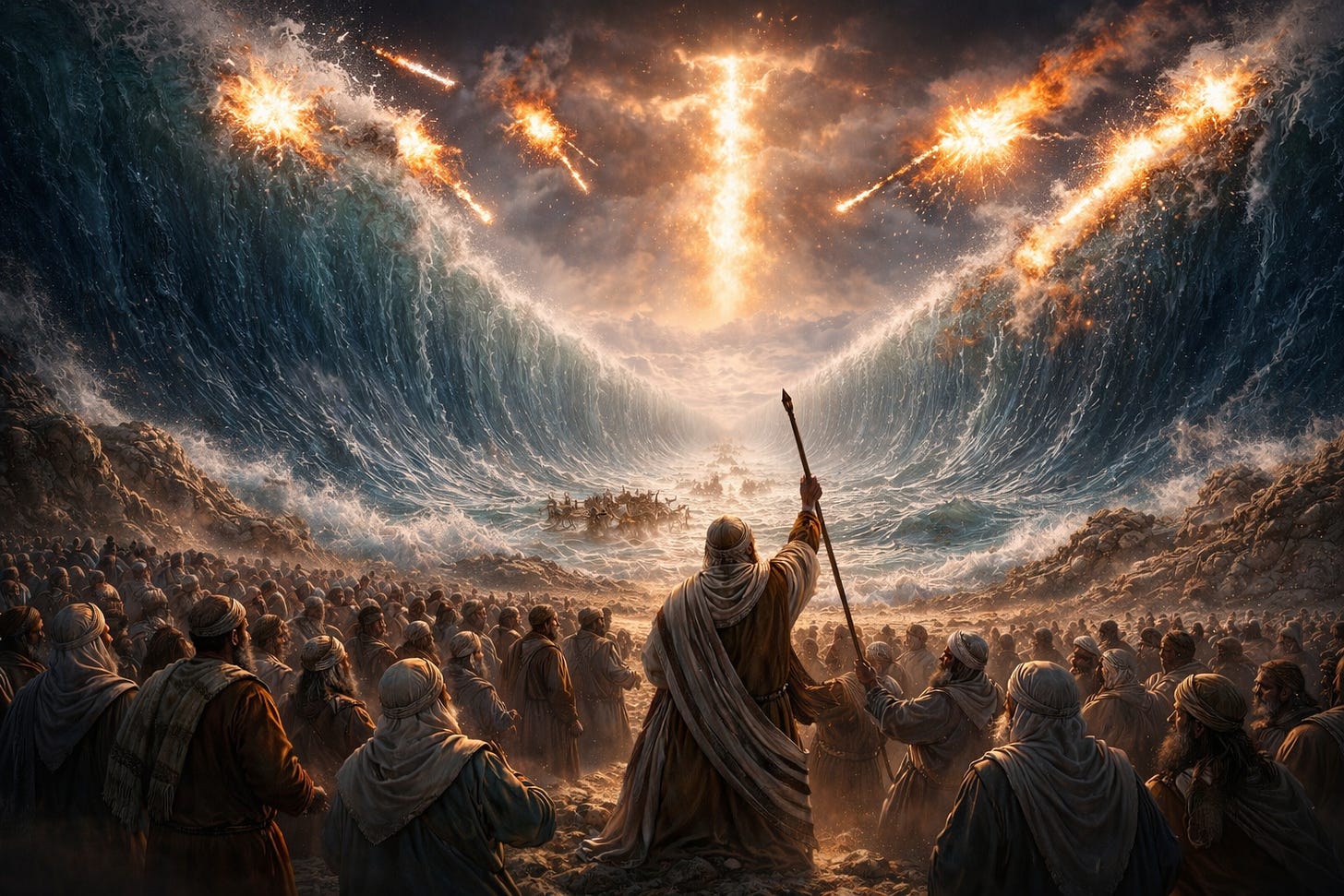
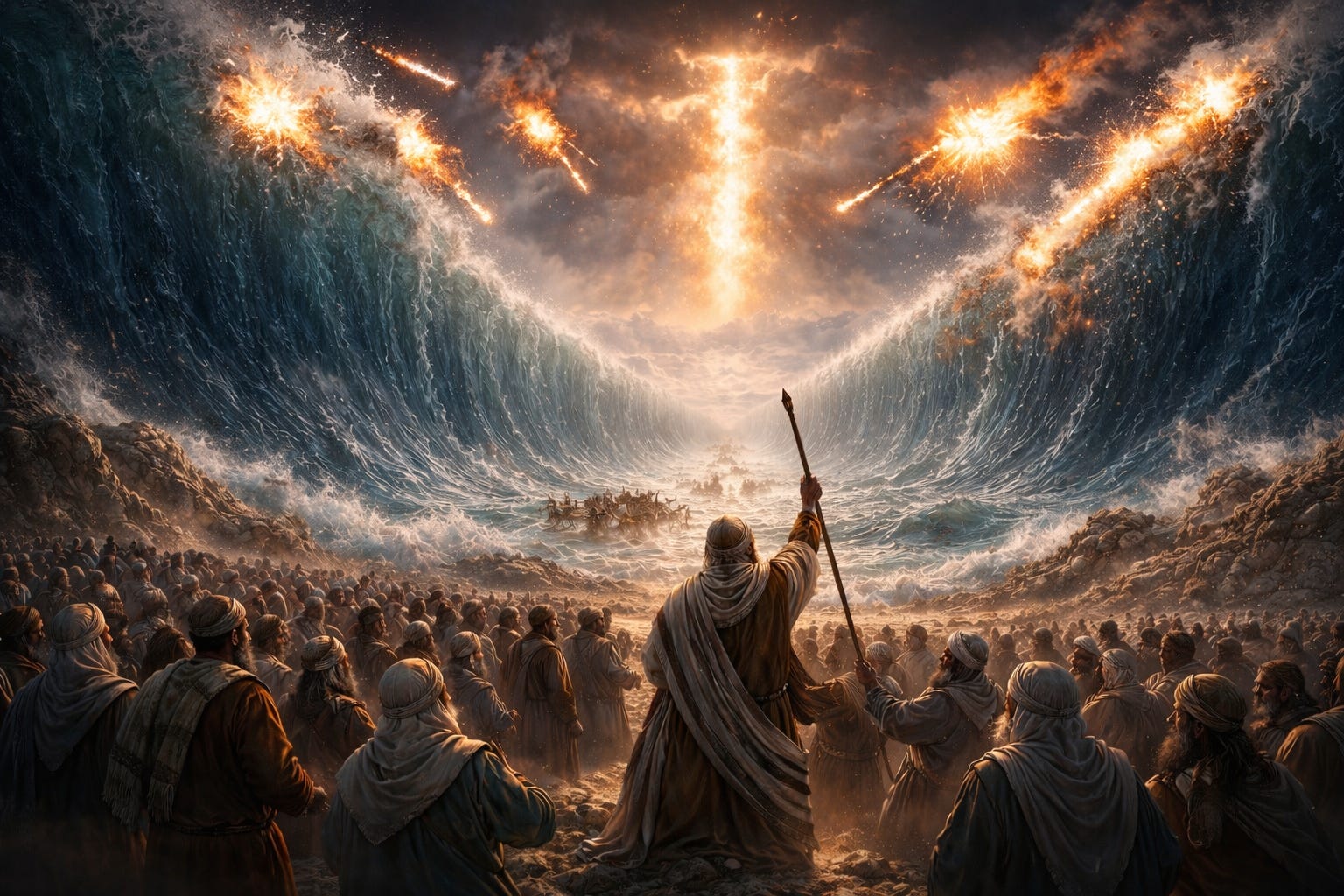
And something even deeper is happening—something that many are missing entirely. When we hear the thunder of explosions, when we see missiles streak across the sky and interceptors rise to meet them, when the heavens themselves seem to open and roar—we are not imagining what it felt like to stand together at Har Sinai. We are there. We are living it. The sound, the awe, the fear mixed with clarity—it is not metaphor. It is a nation once again standing beneath a sky that speaks. It is a people being reminded, in the most visceral way possible, that history is not random and that destiny is not theoretical.
And perhaps, if we are being honest, this is also what it felt like at קריעת ים סוף.
A nation standing on the edge of impossibility, watching the laws of nature bend, split, collapse. Amazed. Bewildered. Flabbergasted. Experiencing a revelation so overwhelming that it rewrites everything a person thought they understood about reality. And yet—at that very same moment—there is another emotion, quieter but no less powerful.
Sadness. Because they knew who was not there. They knew that the majority—men, women, children—had chosen to remain behind in Egypt, clinging to the familiarity of exile rather than stepping into the uncertainty of redemption. They knew that those souls would never see what they were now witnessing. That they had perished in the darkness, not just physically, but existentially—choosing a reality that no longer existed.
And perhaps that is why the Torah says “אז ישיר משה ובני ישראל”—in the future tense. Chazal teach that this hints to תחיית המתים, to a future moment when those who were not there will rise and be able to join in that song. Because even in the height of revelation, even as the sea stood like walls and the nation burst into song, there was a recognition that something was incomplete.
Not everyone made it. And that recognition carries forward.
Because we are living in a moment of revelation—raw, overwhelming, undeniable—and yet we also know that there are so many who are not here to experience it. Not because they couldn’t be, but because they chose not to be. Because they are still holding onto an exile that has already expired, still framing reality as something distant, something theoretical, something to visit rather than to live.
And this is not said with anger. It is not said with condescension. It is said with the same mixture of awe and sadness. Awe at what we are privileged to witness. And sadness at who is not here to see it.
Because the story is unfolding, whether one participates in it or not. The sea is splitting. The heavens are speaking. The moment is happening. And the only question that remains is whether a person chooses to stand inside it—or to hear about it later.
Because the real tragedy is not that Jews do not love Israel. It is that too many still do not recognize it as real. And until that shift happens, the words “לשנה הבאה בירושלים” will remain exactly that—words.

Author: Joshua Wander
The Geula Movement inspires and mobilizes Am Yisrael to actively advance redemption through Torah, unity, and action—restoring Jewish sovereignty, rebuilding the Beit HaMikdash, and shining light from Zion to the nations. https://geulamovement.substack.com/