Dear friends,
This will be my last Torah essay on Substack before I, God willing, go on maternity leave. My maternity leave will be longer, but I’m hoping to be back writing here within about a month. I’ll share the happy news here when it comes.
This pregnancy hasn’t been an easy one, and I’ve had moments of frustration at not being able to function the way I wanted to. But from the beginning, I set myself a small challenge—to keep writing here each week—and I’m grateful that I’ve been able to keep it going.
More than anything, I’m grateful to all of you. This community has become a real highlight for me, and writing these Torah essays has truly felt like a labor of love in every sense. What has meant the most are the messages, emails, and comments—the sense that this is not just writing into the void, but a real conversation.
As I prepare for Pesach, I’m holding close in my heart and prayers everyone in Israel. We mourn the soldiers and civilians we have lost, and hold their families in our hearts.Even as things are going well militarily, the daily reality remains heavy—children out of school, shopping for the holiday with sirens in the background, and more and more families carrying the weight of reserve duty. May Hashem protect them, and all the IDF soldiers defending our people. If you’re in Israel, please know you are very much in our thoughts.
I’m also thinking about the many people in Iran who are courageously longing for freedom, even as they live under a regime that suppresses it. And I’m holding in mind those serving more broadly—American service members and others working to protect and defend the innocent around the world. May they be safe and return home in peace.
With prayers for peace and security in Israel and around the world—
Shabbat Shalom & wishing you a joyful and meaningful Passover,
Mijal

The Freedom to Be Ourselves
If Hatzalah Needs Explaining, We’ve Already Lost
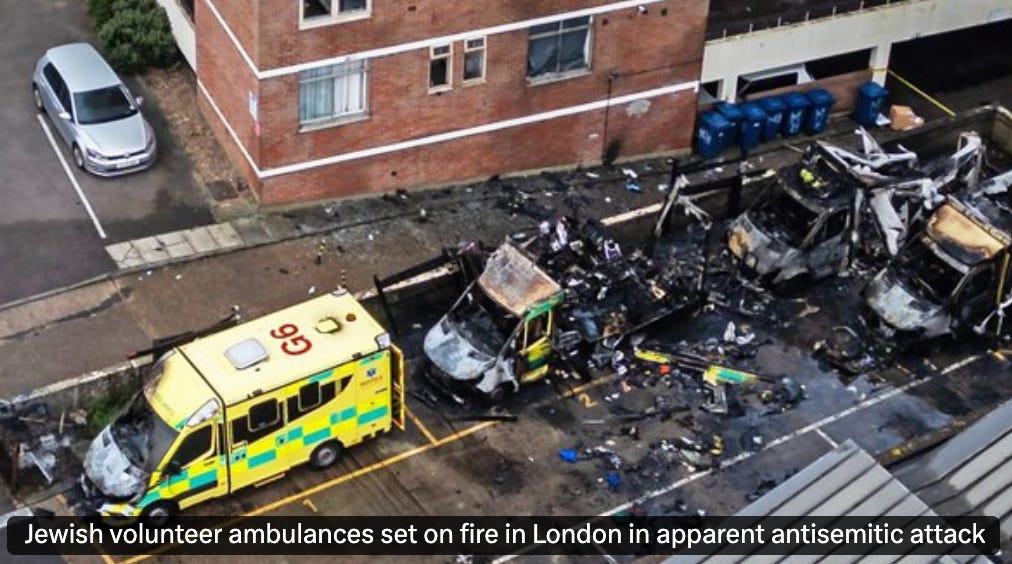
Early this week, terrorists set fire to four Hatzalah ambulances in London. Hatzalah – the volunteer Jewish emergency service built on the principle that when someone is dying, minutes matter.
I made the mistake of spending too long on X reading reactions. Tweet after tweet questioned why Jews should have their own ambulance service at all.
The Jewish community’s response was swift: these ambulances are funded by Jews and run by Jewish volunteers, but they serve everyone.
I couldn’t stop thinking about that response. Not because it was wrong – I am genuinely proud of what Hatzalah does.
But because of what it assumed: that Jewish particularity requires a universal alibi. Would arson be any more justified if these ambulances served Jews?
Would anyone demand this of a Black mutual aid society? A church food pantry? An Asian community health clinic? And yet there we were, translating ourselves into a language that those who hate us might accept.
The Hatzalah moment reveals a question at the heart of Passover: what does it mean to be a particular people with a universal impact?
This Shabbat, known as Shabbat HaGadol (the Great Shabbat), argues that our impact depends on our confidence that our particularity is legitimate, whether or not it is recognized by others.
Shabbat HaGadol, the Shabbat before Passover, marks the Israelites’ first act of defiance. The Midrash explains that the miracle of this Shabbat unfolded before the Exodus.
Each Israelite family was commanded to take a lamb – an animal the Egyptians regarded as sacred – and tie it to their bedpost in full view of their oppressors. The Egyptians demanded an explanation. And the Israelites answered plainly: we are going to slaughter it as a Passover offering, because God commanded us. And the Egyptians could not say a word.
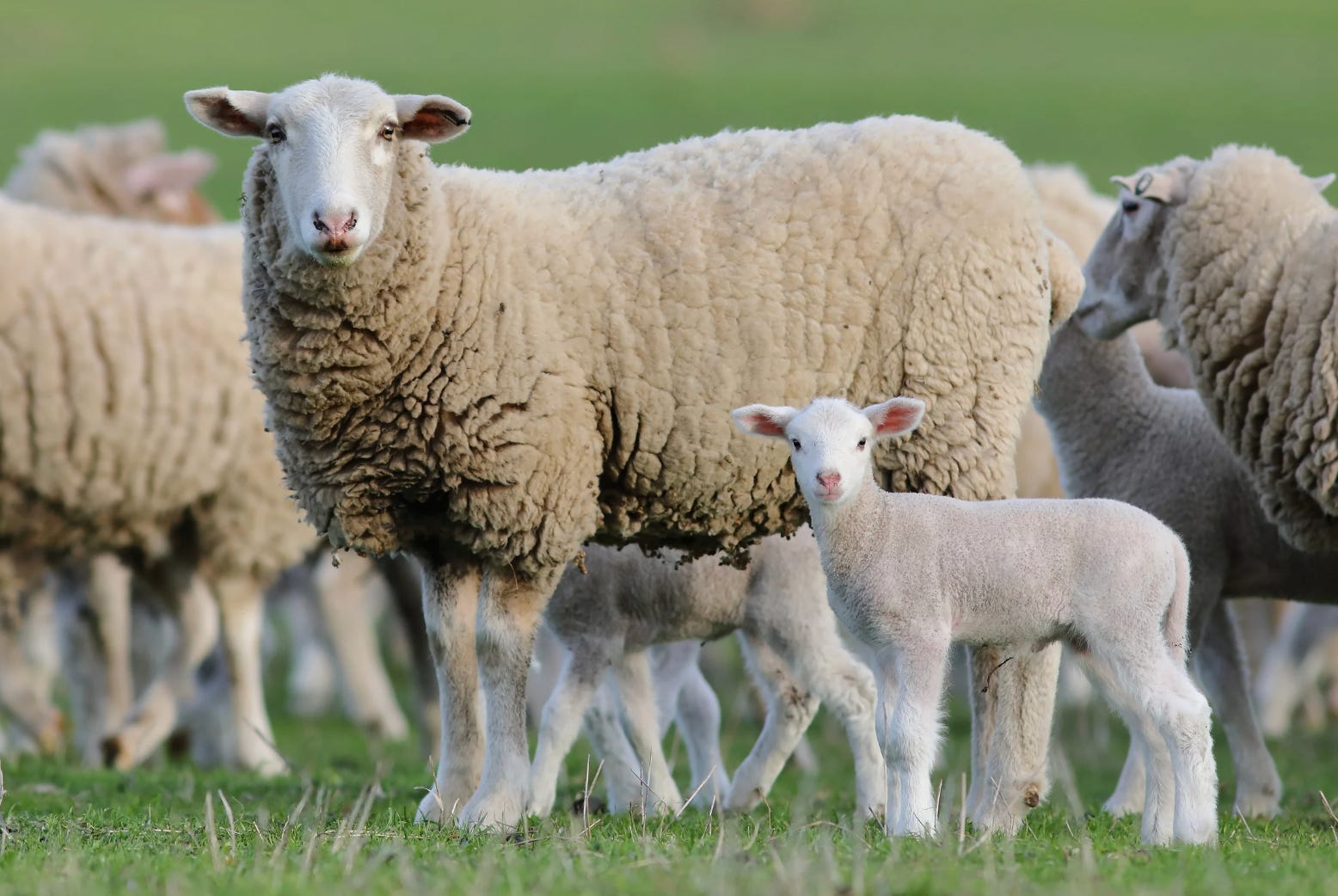
That silence is the miracle of Shabbat HaGadol: a people performing their most particular, unapologetic act of covenantal obedience, and an empire struck speechless.
My friend Sarah Hurwitz, in her recent and brilliant book As a Jew, calls the Torah “one long protest — a polemic, an epic critique, page after page of pure trolling — directed at the powerful empires of its time.”
Where those empires elevated kings to godlike status and built systems of domination and forced labor, the Torah insists on something radically different – a society that protects the vulnerable, distributes responsibility across the people, and places limits on power.
The Torah does not argue with Egypt on Egypt’s terms. It builds something else entirely.
Here is the paradox at the heart of Passover.
The Exodus story is incredibly particular. The Seder is designed for Jewish families – the paschal offering was restricted to Jews. We engage in weeks of frenzied preparation that no universalist framework could explain. This is ferociously, defiantly ours.
And yet. The political theorist Michael Walzer has documented how the Exodus became the template for virtually every major liberation movement in the modern West. The Puritan founders of America saw themselves as a new Israel. Abolitionists preached it. Martin Luther King invoked it. Latin American revolutionaries, anti-colonial movements across Africa – all of them reached for this story. The Exodus belongs to the world.
This is not a contradiction. It is the point.
Only because they slaughtered the lamb on their own terms did the Israelites produce something so universal that others recognized themselves in it.
The Exodus didn’t become the world’s story because the Israelites made it accessible. It became the world’s story because they didn’t try to.
This is not just about Passover. It’s about how we Jews live in the world.
In a recent Tablet article, Alana Newhouse writes that Zionism became a target because it embodies something both sides of the West struggle to imagine: a nationalism that defends particularism while protecting individual freedoms and rights.
The disproportionate fury directed at Israel, she argues, is not really about policy. It is about the fact that Israel insists on existing as itself. It has children at above-replacement rates while the rest of the West slows. It fights for its survival with a seriousness that embarrasses nations that have given up on their own.
That refusal is what the post-particular West cannot forgive. As Newhouse puts it: “it is only through the particular that we can truly reach the universal – because it is our particularities that make us real.”
The Israeli thinker Micah Goodman made a related argument recently in conversation with Dan Senor. The stakes of the US–Israel confrontation with Iran, Goodman explained, extend far beyond Israel’s security. They are about preventing a third world war, about whether America or China sets the terms of the coming century, and about whether the people of Iran and Lebanon will ever live free.
And then Goodman asked a question I haven’t been able to put down: do the Israeli pilots understand, as they fly their missions, that the weight of the world is on them?

This question sent me back to Egypt.
Did the Israelites know?
Did the family tying the lamb to the bedpost that Shabbat in Egypt – still enslaved, still surrounded by their oppressors – understand that they were inaugurating a story that would become the world’s story?
Almost certainly not. After generations of slavery, they were finally, irrevocably, acting as themselves – speaking in their own language, answerable only to their own God. They tied the lamb because God told them to. Because they were leaving.
And that is precisely what made it reverberate.
We get to do both: be fiercely, unapologetically particular – and matter to the world.
The universal is not the justification for the particular. It is its consequence. Reverse the order – “don’t worry, this is really for everyone” – and you have inverted the entire logic of the Exodus.
The Hatzalah ambulances should exist because Jewish tradition commands us to save lives. They should be protected because we have the same rights as any other community in a democracy. Not because non-Jews also benefit. To make that the point is to concede something we cannot afford: that our existence requires the empire’s permission.
God instructed a band of slaves to build the exact opposite of every empire they had ever known.
The Israeli pilots flying over Iran may not fully see the weight they carry. The Israelites tying lambs to bedposts almost certainly didn’t see theirs.
But whether we realize it or not, Passover is the proof of concept. Intensely, stubbornly, defiantly ours – and precisely because of that, the world’s.
May we be free enough, this Passover, to just be ourselves.
Shabbat Shalom and Happy Holidays,
Mijal
Sacks Torah: Tzav and Passover
This Shabbat, we will read the Torah portion of Tzav in synagogue. Check out this essay from Rabbi Jonathan Sacks of blessed memory on the parasha.
I’ve also loved seeing the new (and freely available) cards for family discussions at the Seder, based on R’ Sacks’ teachings and produced by the Sacks Legacy Fund. They’re called Cards & Conversation and are a really nice way to make the Seder more interactive and meaningful. Definitely worth checking out.