
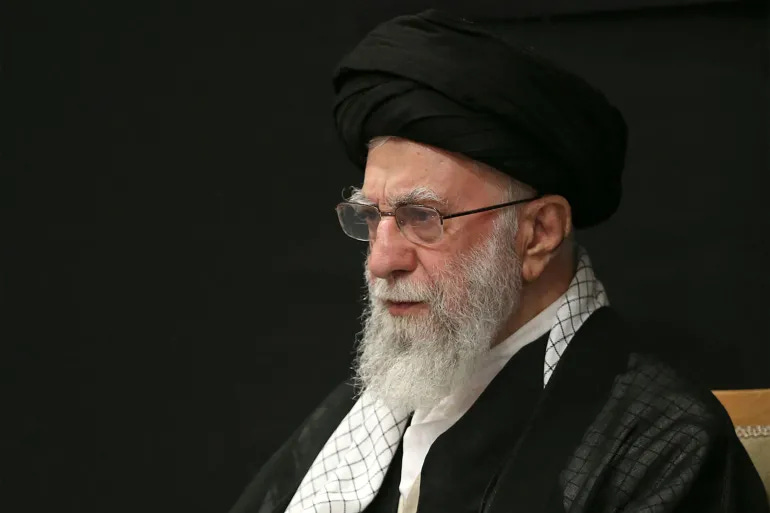
Will the February 28 assassination of Iran’s Supreme Leader, Ayatollah Ali Khamenei, finally extinguish jihadist fervor and global terrorism? Is this the decisive blow some hope for—a potential “end of an era” for the Islamic Republic’s hardline clerical rule, a “Berlin Wall moment,” a real step toward regime change?
Many American politicians appear convinced it is:
-
Lindsey Graham (R-SC): “The mothership of terrorism is sinking. The captain is dead. The largest state sponsor of terrorism—Iran—is close to collapsing.”
-
Dan Crenshaw (R-TX): “Iran’s Supreme Leader is dead and, trust me, the world is better for it.”
-
Rick Scott (R-FL): “I’m glad that Khamenei’s gone, the Ayatollah’s gone. The world’s a safer place.”
-
Daniel Webster (R-FL): “The death of Ayatollah Khamenei makes the world a safer place.”
In reality, this latest killing will have next to zero impact on the global jihad — and not just because Sunnis vastly outnumber Shias (which Iran is).
This dismal prognostication is fortified by the fact that, for 20 years now, every time an Islamic terror leader has been killed, politicians and media exulted, portraying the death as a “major blow” to the jihad; and, for 20 years now, I have responded by recycling an article that I first wrote in 2006, titled “The West’s Multi-Headed Monster.”
Although I changed the names of the jihadist leaders killed to suit the occasion—first Abu Mus‘ab al-Zarqawi, then Abu Hamza al-Masri, then Abu Laith al-Libi, then Abu Omar al-Baghdadi and Abu Ayub al-Misri, then Osama bin Laden, then Abu Bakr al-Baghdadi, and then Ayman al-Zawahiri—my conclusion always remained the same:
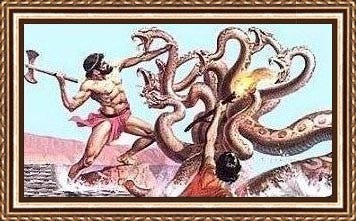
The West’s plight vis-à-vis radical Islam is therefore akin to Hercules’ epic encounter with the multi-headed Hydra-monster. Every time the mythical strongman lopped off one of the monster’s heads, two new ones grew in its place. To slay the beast once and for all, Hercules learned to cauterize the stumps with fire, thereby preventing any more heads from sprouting out. Similarly, while the West continues to lop off monster heads like figurehead Zarqawi [or Khamanei, Zawahiri, bin Laden, al-Baghdadi, et al] it is imperative to treat the malady—radical Islam—in order to ultimately prevail. Victory can only come when the violent ideologies of Islam are cauterized with fire. But alas, the Hydra-monster is myth, while radical Islam is stark reality.
Consider, for instance, all the exultation that took place in 2006 after al-Zarqawi—the forefather of the Islamic State, or “Al-Qaeda Second Generation”—was killed. Then, almost every major politician, including President Bush, Prime Minister Blair, and Iraq’s Prime Minister Maliki, gave some sort of victory speech. The New York Times called his death a “major watershed in the war.”
Similarly, in 2008, after Abu Laith al-Libi was killed, Congressman Peter Hoekstra issued a statement saying that his death “clearly will have an impact on the radical jihadist movement.”
More myopic triumphalism was in the air after Abu Omar al-Baghdadi and Abu Ayub al-Masri were killed in 2010 during a joint U.S.-Iraqi operation. Then, none other than Joe Biden, serving as vice president, said the “deaths are potentially devastating blows to al-Qaeda in Iraq [the embryonic form of the Islamic State],” adding “This operation is evidence in my view, that the future of Iraq will not be shaped by those who would seek to destroy that country”—a prediction that proved to be woefully wrong.
Similarly, U.S. commander Gen. Raymond Odierno asserted that “The death of these terrorists is potentially the most significant blow to al-Qaeda in Iraq since the beginning of the insurgency,” adding that it would be “very difficult” for the al Qaeda network to replace the two men.
And who could forget all the media triumphalism, if not hysteria, surrounding the 2011 death of Osama bin Laden? Then, CNN security analyst Peter Bergen declared that “Killing bin Laden is the end of the war on terror. We can just sort of announce that right now.” Insisting that the “iconic nature of bin Laden’s persona” cannot be replaced, Bergen further suggested that “It’s time to move on.”
Another CNN analyst, Fareed Zakaria, assured us that “this is a huge, devastating blow to al-Qaeda, which had already been crippled by the Arab Spring. It is not an exaggeration to say that this is the end of al-Qaeda in any meaningful sense of the word.”
A quick reminder:
If you’d like to support my work and go deeper than what’s available publicly, consider a paid subscription. For just a few dollars a month, you’ll receive:
-
New, full-length articles every Week
Carefully researched pieces you won’t find elsewhere. -
Full access to the complete premium archive
Archive of in-depth writing, research, and commentary — all in one place.. -
Entry into the subscriber chat
A private space for serious readers and thoughtful discussion.

Author: Contributor
For more details on this author's background and expertise, please refer to the content within the article itself. The views and opinions expressed in this piece are those of the author and do not necessarily reflect the official policy or position of geula.news or its affiliates.